Healthcare Marketing Blogs – MediVerticals


Diabetes Awareness Month Marketing Plan 2026: Campaign Ideas for Healthcare Organizations
Every November, call volume climbs at your clinic for diabetes-related visits, your front desks handle a wave of insurance questions, and the marketing team scrambles to put together a Diabetes Awareness Month marketing plan days after the month has already started. Planning ahead is how you avoid that, because it gives practices more time to generate interest and convert it into appointments that may extend into December. Follow our 7-day marketing plan below, and your practice will have a high chance to be one of them.
A Diabetes Awareness Month marketing plan is a dated schedule that ties one clear goal to specific posts, emails, screenings, and partner activities during November, with a booking or risk-assessment path on every piece. This plan covers objectives, audience, content, social, email, themes, and a year-round calendar, built for US clinics, endocrinology practices, and primary care groups that see patients with diabetes and prediabetes every week.
Overview: This Diabetes Awareness Month marketing plan gives healthcare organizations a measurable objective, a segmented audience, a seven-day content sprint, and a reusable calendar for turning National Diabetes Month into booked visits instead of just a handful of likes.
If you’re reading this before November 1, you have time to build the whole plan. If not, any seven consecutive days still work.
Table of Contents

Diabetes Awareness Month Marketing Plan and Campaign Objectives
Start with one objective and a number you can defend. The right objective depends on what kind of organization is running the Diabetes Awareness Month marketing plan:
- Private practice or clinic: The goal may be to increase first-time appointments or appropriate A1C screenings.
- Multi-location or primary care group: The goal here can be completed risk assessments per location, tracked against last November.
- Endocrinology or diabetes education program: The goal for this can be referrals into a diabetes self-management education (DSME) class.
- Community health center or FQHC: The goal can be screening-event attendance or diabetes prevention program enrollment.
Add one supporting goal, such as email list growth, then pull last November’s calls, form fills, and landing-page visits so the result has a baseline to beat.
The need is well-documented. The CDC’s National Diabetes Statistics Report puts total diabetes at 40.1 million Americans, or 12.0% of the population, and of that group, 11.0 million people, or 27.6%, are undiagnosed. Another 115.2 million US adults are living with prediabetes, and most don’t know it. The USPSTF recommends screening adults ages 35 to 70 who have overweight or obesity, a Grade B recommendation, with a three-year interval reasonable once a first result is normal.
That’s your campaign’s real limit: don’t drive more screening requests than your clinical team can follow up with.
If planning hours are the bottleneck, a healthcare content marketing agency can take the strategy and production off your clinicians.
National Diabetes Month Audience Research and Patient Segmentation
Segment by risk and life stage, not by diagnosis alone, and write each asset to one group.
- Adults overdue for an annual visit, ages 35–70 with overweight or obesity: These patients fall inside the USPSTF’s screening recommendation.
- Patients with known pre-diabetes: 2 million US adults are living with pre-diabetes and are most likely to respond to a “this doesn’t have to become type 2” message.
- Newly diagnosed type 2 patients: These patients need “what happens next” content more than awareness content.
- Family members and caregivers: They often book the first appointment for someone else.
- Referral sources (primary care, pharmacists, dietitians, employers): This segment wants a clear way to send patients your direction.

Before you write a single caption, read 90 days of comments, DMs, call notes, and reviews, and copy the exact words patients use, such as “my sugar’s been high.” National Diabetes Month content performs better when it sounds like the waiting room, not a textbook.
Never build segments from clinical records without your compliance officer’s sign-off, and keep diagnoses out of any marketing list not covered by your HIPAA authorization.

November Health Awareness Month Content Marketing Strategy
November is a crowded calendar month. COPD, lung cancer, open enrollment, and Veterans Day all compete for attention, and Thanksgiving pulls focus late in the month. A specific theme for November health awareness month, not a general “diabetes matters” post, is what cuts through a news feed this full.
Build the week from four content types, roughly half value and half ask:
- Educational: This means content like “Five things that raise your A1C besides sugar.”
- Access: Explain insurance coverage for screenings, tele-health options, and DSME class schedules on one page.
- Trust: Publish a clinician’s 60-second answer to one common patient question in a short video or another suitable format.
- Proof: In this content, share the outcomes you’re permitted to share, such as a new education cohort filling up.
Anchor the week with one lead piece: a clinician-written page answering “Am I at risk for type 2 diabetes?” Format it so search and answer engines can quote it directly, with a plain answer in the first two sentences, the clinician’s name and credentials, a reviewed-on date, linked sources, and a link to a validated risk tool. Health content faces a higher bar in search, and a Diabetes Awareness Month marketing plan only pays off if the page behind it earns that trust.
Diabetes Awareness Content Ideas for Healthcare Marketing Campaigns
A November-long push is hard for a small team to sustain, so run it as a focused sprint. These diabetes awareness campaign ideas are a seven-day plan, something a two- or three-person marketing team can execute without an agency on retainer.
The 7-day Diabetes Awareness Month marketing plan:
Day 1, Launch the hub (website, social, email): Publish a risk-assessment landing page for your practice, post a blue-themed campaign announcement on social media channels, and send the first email to your mailing list.

Day 2, Bust a myth (Instagram, Facebook): Post a five-slide carousel, Myth Vs Fact format, for example: “Myth: Diabetes is caused by eating too much sugar,” then share the fact correcting it. You can also do a 30-second Reel on this topic.
Day 3, Clinician on camera (Reels, Shorts, website): Record a 60- to 90-second clinician response to ‘What are the early signs of type 2 diabetes?’ and publish it on social media and the campaign landing page. Keep it captioned, compliant, and clinically reviewed.
Day 4, Open the questions (email, Instagram Stories): Send Email 2, and run an anonymous question box on Instagram Stories, where patients embarrassed to ask in the waiting room can actually reach out.
Day 5, Show the team (LinkedIn, Facebook): Post a “why I specialize in diabetes care” post from a clinician, educator, or dietitian. Patient stories can run too, but only with written consent and clinical review.
Day 6, Go local (partner channels, in person): A co-hosted screening event or one-pager with an employer, pharmacy, gym, or faith group. November 14 is World Diabetes Day, marked by the blue circle symbol, and a natural anchor for an in-person or lit-up-blue moment.
Day 7, Close the loop (social, email): Do a “what happens at your first visit” post, send your third email with a pinned booking link, and get your results logged before the week ends.
Any seven consecutive days inside November work. A late start on November 20 still finishes inside the month.
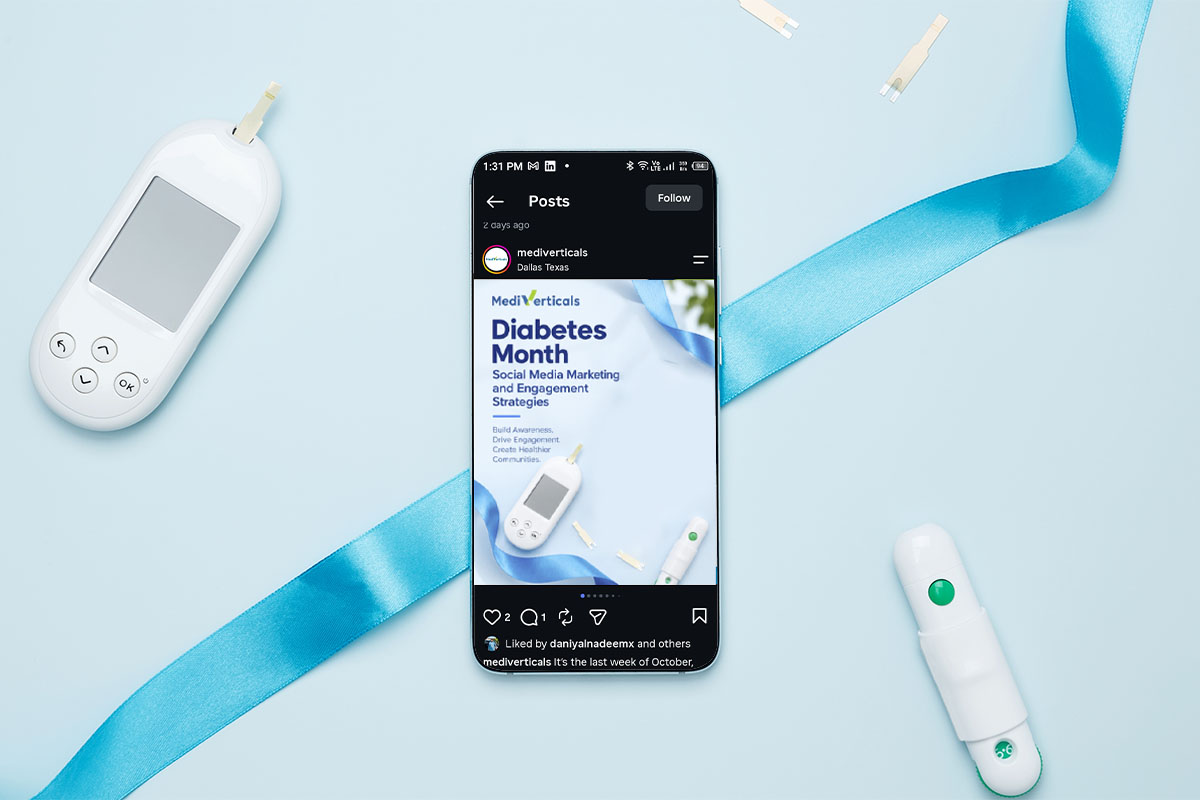
Diabetes Month Social Media Marketing and Engagement Strategies
The strongest diabetes awareness campaign ideas invite quiet participation. Many people won’t comment on a diabetes post publicly, but they’ll save it, forward it, or send a DM, so track those alongside likes. Have each template reviewed by a clinician before it goes live:
- Day 2 carousel caption: “Myth: diabetes is just about eating too much sugar. Fact: type 2 diabetes involves genetics, insulin resistance, and more, and it’s manageable with the right plan. Curious about your own risk? A free 1-minute risk test is a good first step: [link].”
- Day 3 Reel, 30 to 45 seconds: On-screen hook, “What are the early signs of type 2 diabetes?” Clinician: “Increased thirst, frequent urination, fatigue, and blurry vision are common, but some people have no symptoms at all.” End card: “Free risk test, link in bio.”
- Day 4 Stories prompt: “Anonymous question box: what would you like to ask a clinician about diabetes or prediabetes?”
- Reply to a risk disclosure: “Thanks for sharing that. A short visit can tell you a lot. Here’s how to book: [link].” One trained staff member sends these, never an automated reply.
Write your messaging rules down before November starts: person-first language (“a person living with diabetes”), no stock photos of tape measures or donuts, no outcome promises like “reverse your diabetes,” and no shaming language about diet or weight.
American Diabetes Month Email Marketing Campaigns
For an American Diabetes Month push, email reaches people who already know your name. Split your list into three groups and send each something different.
- Current patients overdue for a visit: Send them a straightforward screening invitation with a booking link.
- Past inquiries who never followed through: Send them a lower-pressure “here’s what a first visit actually involves” message.
- Referral partners (PCPs, pharmacists, dietitians): Send them a short clinical update they can forward, positioning your practice as the place they send patients during American Diabetes Month and beyond.

End every American Diabetes Month email with a reply prompt, such as “What’s the one question about diabetes you wish someone had answered sooner?” Send only to your opted-in list, keep diagnoses out of the copy itself, and have your compliance officer confirm your list use fits your HIPAA policies.
November National Awareness Month Campaign Themes and Creative Assets
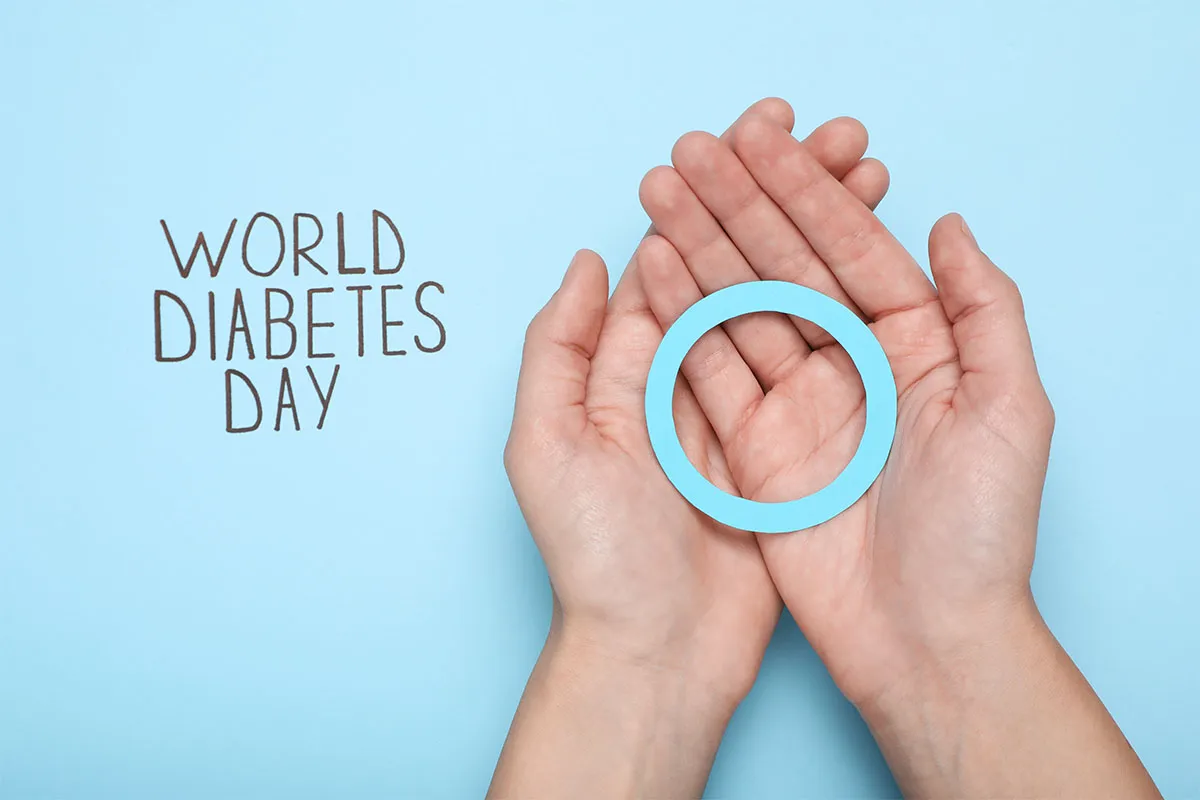
The color tied to diabetes awareness is blue. The blue circle has been the global symbol for diabetes since 2007, adopted after the United Nations recognized World Diabetes Day, which falls on November 14 in honor of Frederick Banting’s birthday, co-discoverer of insulin. One blue accent across your November assets gives the whole plan a consistent look without touching your actual brand palette.
Six themes that fit a 2026 November National Awareness Month campaign of diabetes:
- “One in four don’t know.” Built around the CDC’s undiagnosed-diabetes figure, a screening-first theme for adults who feel fine and assume that means they’re fine.
- “Prediabetes isn’t a life sentence.” Speaks to the 115.2 million US adults with prediabetes.
- “Before the complications start.” Targets patients overdue for an A1C, with a focus on kidney, eye, and nerve risk.
- “Your plate, your plan.” A practical nutrition angle built from what your own dietitian teaches.
- “Ask your pharmacist.” Builds a referral loop with local pharmacies.
- “Light it blue.” Ties directly to World Diabetes Day on November 14.
Pick one theme for the sprint. A national diabetes awareness month campaign that mixes general wellness, weight loss, and diabetes messaging in the same week leaves readers unsure what to do. A focused national diabetes awareness Month works best when every piece asks for one next step.
Diabetes Awareness Month Marketing Plan for Year-Round Healthcare Marketing
One week builds the habit, and the calendar after it builds the trust that turns a one-time screening into a long-term patient. Reuse this Diabetes Awareness Month marketing plan at these points through the year:
- Late March: Diabetes Alert Day, the ADA’s one-day wake-up call, a good moment to re-run your risk-test push.
- November 14, every year: World Diabetes Day, a reason to refresh your blue-themed assets outside a full sprint.
- Next November: your next American Diabetes Month campaign, using this year’s numbers as the baseline.

Between those dates, keep the risk-assessment landing page live, refresh its reviewed-on date each quarter, and publish one clinician-written answer a month. Within two weeks of the sprint, hold a 30-minute debrief on which asset drove the most bookings, then file the winners as templates for next year’s Diabetes Awareness Month marketing plan.
A healthcare SEO agency can set up the tracking and search-side work so the risk-assessment page keeps earning visits long after November ends. Book a strategy call.

Diabetes Awareness Month Marketing Checklist: To-Do List and Content Checklist for Healthcare Teams
A national hygiene month campaign is also a brand-awareness opportunity that reaches past your existing patient list entirely, past all four segments above.
Local press and community outreach. Submit a short item to your local paper about your hygiene team’s involvement. You may call it national hygiene month or the more casual oral hygiene month in the pitch. Local outlets pick up practice stories more readily during a named observance than during a random week.
Content Checklist: Assets for Your Diabetes Awareness Campaign
Check every piece before it goes live
☐ Written for one audience segment, not everyone at once.
☐ Reviewed by a licensed clinician.
☐ Includes one clear next step: a booking link or a risk-assessment link.
☐ Uses person-first language, makes no outcome promises, and avoids shaming.
☐ Patient stories included only with written consent and clinical review.
☐ Video content captioned.
Website
☐ Risk-assessment landing page for your practice, live before Day 1.
☐ Clinician-written lead page answering “Am I at risk for type 2 diabetes?” with a plain answer in the first two sentences, the clinician’s name and credentials, a reviewed-on date, linked sources, and a link to a validated risk tool.
☐ Access page covering insurance coverage for screenings, telehealth options, and DSME class schedules.
Social media
☐ Day 1: blue-themed campaign announcement.
☐ Day 2: five-slide Myth vs. Fact carousel, plus an optional 30-second Reel.
☐ Day 3: 60- to 90-second clinician video answering “What are the early signs of type 2 diabetes?”
☐ Day 4: anonymous question box in Instagram Stories.
☐ Day 5: “Why I specialize in diabetes care” post from a clinician, educator, or dietitian.
☐ Day 7: “What happens at your first visit” post with a pinned booking link.
☐ A prewritten reply template for risk disclosures, approved by your clinical and compliance teams.
☐ Email 1 (Day 1).
☐ Email 2 (Day 4).
☐ Email 3 (Day 7).
☐ A reply prompt at the end of every email, such as “What’s the one question about diabetes you wish someone had answered sooner?”
☐ A short clinical update for referral partners (PCPs, pharmacists, dietitians) that they can forward.
Local and partner
☐ A co-hosted screening event or a one-pager for your Day 6 partner.
☐ A “Light it blue” asset or event plan tied to World Diabetes Day on November 14.
Creative
☐ One blue accent applied consistently across assets, without changing your brand palette.
☐ No stock photos of tape measures or donuts.
Want an expert healthcare digital marketing agency to run this campaign for you? Book a call with MediVerticals.
Diabetes Awareness Month Marketing Plan Related FAQs
How can healthcare organizations align campaigns with National Diabetes Month?
Pick one measurable objective, such as booked screenings or risk-test completions, and build a dated schedule of posts, emails, and partner activities around National Diabetes Month rather than posting all month generically. Anchor everything to one landing page with a clear next step, and have patient-facing assets clinically reviewed before they go live.
Can a Diabetes Awareness Month marketing plan support both awareness and patient acquisition?
Yes. Awareness content earns attention and trust, while a consistent risk-assessment landing page and booking path turns that attention into completed screenings and first visits, which is what most practices need in November to produce.
Which digital channels are most useful for American Diabetes Month campaigns?
Start with your website, email list, and Google Business Profile, since they reach people already searching for care or familiar with your practice. Add one social channel where your patients spend time and one local partnership. Two channels executed well outperform five done thinly.
How can a diabetes awareness campaign encourage meaningful community participation?
Invite quiet participation: saves, shares, DMs, and risk-test completions are all signs people are engaging even when they stay silent publicly. Local partnerships, a World Diabetes Day event, and an anonymous question box all give patients a low-pressure way to take part.
Can small healthcare practices implement a Diabetes Awareness Month marketing plan with a limited budget?
Yes. The seven-day structure here is built for a two- or three-person team, and most of it costs staff time more than ad spend. A small practice can run one or two channels well, track results against last November, and expand the following year once it knows which piece drove bookings.
Ready to Run Your Diabetes Awareness Month Marketing Plan?
A Diabetes Awareness Month marketing plan only works if someone owns it from Day 1 to Day 7, and most practices don’t have a spare person for that in the middle of November. Run the seven days as written, measure them honestly against last year, and keep what works for next November. If you’d rather hand the production side to someone else, talk to MediVerticals. We’ll build the risk-assessment page, the posts, and the emails, and set up the tracking that shows what actually drove bookings.
This article is general marketing information, not medical, legal, or compliance advice. Have clinical content reviewed by a licensed professional and campaign practices reviewed by your compliance officer. MediVerticals is a healthcare marketing agency and does not provide clinical care, diagnoses, or treatment.

Samantha Leonie
Samantha Leonie is a digital marketing manager with expertise in healthcare marketing and patient-focused growth strategies. She leads high-impact digital campaigns that strengthen online visibility, and build trust. Known for her strategic thinking and compliance-driven approach, she delivers marketing solutions that create lasting results.
Author
Samantha Leonie
Author
Samantha Leonie is a digital marketing manager with expertise in healthcare marketing and patient-focused growth strategies. She leads high-impact digital campaigns that strengthen online visibility, and build trust. Known for her strategic thinking and compliance-driven approach, she delivers marketing solutions that create lasting results.
Fact Checker
No authors found.
Author: Samantha Leonie