Healthcare Marketing Blogs – MediVerticals


Patients search first now. The phone call comes after, if it comes at all.
By the time someone picks up the phone, they’ve already looked you up, read a few reviews, and maybe asked ChatGPT or Google’s AI Overview what to expect from a visit like theirs. That shift is the whole story behind the trends in healthcare marketing taking hold in 2026.
Most of these trend roundups are written for hospital systems and pharma brands spending tens of millions a year. You’re probably not one of them. A Tebra survey of 106 private practices found most clinics run on 1 to 5 percent of revenue for marketing, with 15,000 dollars a year being the most common total budget. Plenty of healthcare advertising trends come and go. The tactics that actually move the needle for that budget, referrals and online reviews, haven’t changed much in a decade.
This list covers both sides. The digital healthcare marketing trends changing how patients find you (chatbots, answer engine optimization, voice search) and the slower trust builders that still carry the most weight: reviews, community presence, real patient stories. Eleven marketing trends in healthcare, picked for the practice running on a real budget.
Table of Contents

Why marketing trends in healthcare matter in 2026
Here’s what falling behind on healthcare digital marketing trends actually costs you. A patient searches for your type of practice, sees three results, and books with whichever one looks most trustworthy in under thirty seconds. That’s not an exaggeration.
A DigitalSilk study found 65 percent of patients research a practice online before booking an appointment, and a separate study found 72 percent read reviews first and trust only providers rated four stars or higher. The patient who could have been yours already made a decision before your front desk knew they existed. They didn’t pick a competitor because that competitor practices better medicine. They picked because that competitor showed up first, looked more credible online, or had thirty recent reviews instead of three from 2019. Three stars looks fine until you’re sitting right next to someone with thirty reviews and a five. These marketing trends in healthcare come down to one thing: whether the next patient searching for what you do finds you, trusts what they find, and picks up the phone. Every one of these marketing trends in healthcare moves that needle in some specific way. These trends in healthcare marketing each target one piece of that decision. That’s the whole game now.
Adopting these marketing trends in healthcare doesn’t just stop you from losing patients. It changes who shows up. A patient who already read your FAQ content, watched a short video of your provider, and checked your reviews walks in informed. They know roughly what the visit costs and what to expect. That means fewer wasted slots and a front desk spending less time explaining things that should have been answered before the patient called. Practices that get this right also see fewer no shows, since a patient who already understands the visit is more likely to actually keep it. There’s also a demand shift in your favor, part of the wider US healthcare industry trends 2026. Outpatient and behavioral health services, the exact kind of care most independent practices provide, are projected to grow at a 12.1 percent compound annual rate through 2032 as more care moves out of hospitals. Those US healthcare industry trends 2026 put you exactly where the growth already is. That’s the upside this list is really about: more of the right patients, with less wasted effort getting them in the door.

Top 11 marketing trends in healthcare for 2026
Below are the top US healthcare industry trends 2026 that will help you grow your practice.


1.Use generative AI and chatbots on your website
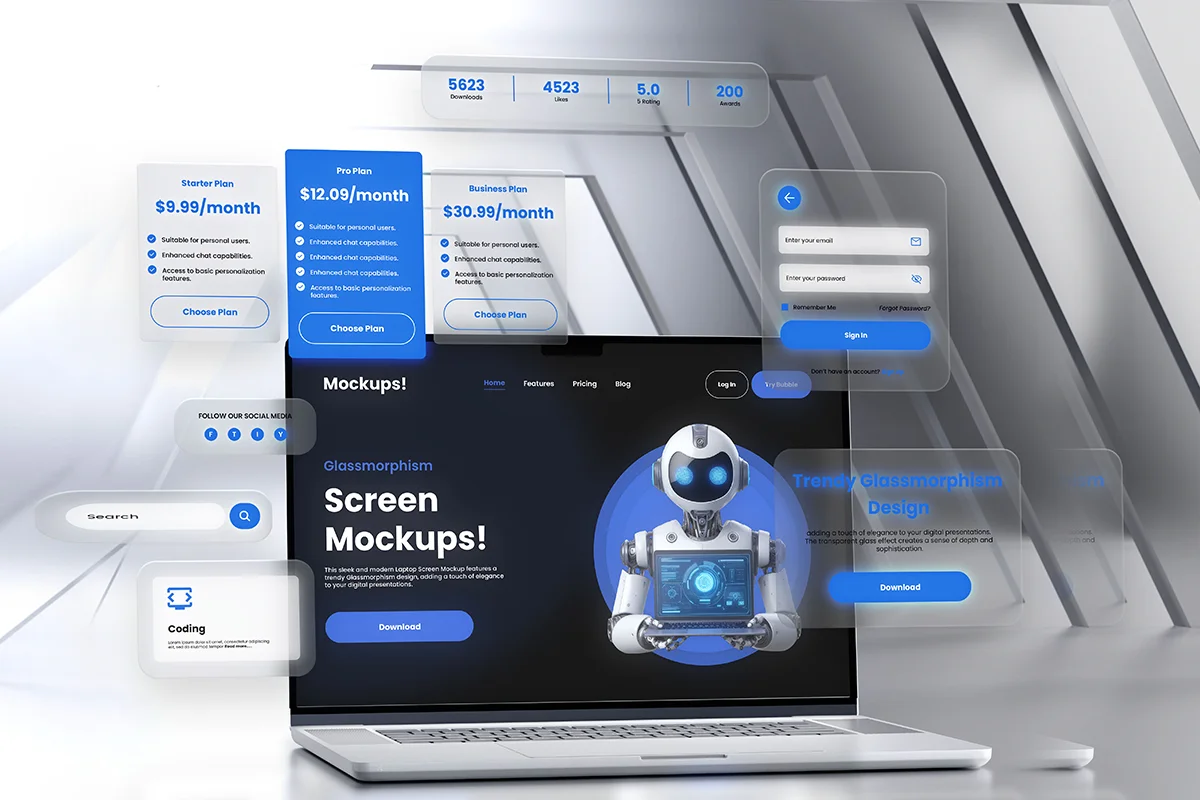
A chatbot answering FAQs at midnight is the employee working your night shift, the one who never calls in sick.
Gartner found 54 percent of organizations already use chatbots for customer facing tasks, and expects them to become the primary service channel for a quarter of organizations by 2027. AI in healthcare marketing trends 2026 matters more here than almost anywhere else, because a Relatient and MGMA analysis found 43 percent of online appointments get booked outside business hours. Your front desk is closed for roughly a third of the day. A generative AI chat widget isn’t. It answers the FAQ a worried patient typed at 11pm, figures out whether they need urgent care or a scheduled visit, and pushes them straight to a booking link before they lose the urge to follow through.
Set it up to handle insurance questions, hours, and common procedure FAQs first. Those are the questions burning out your staff anyway. Then connect it directly to your scheduling tool so a chat doesn’t dead end without a booked appointment.
2. Optimize your website for AEO (answer engine optimization)
You cannot ignore ai in healthcare marketing trends 2026. Answer engine optimization means structuring your site so ChatGPT, Google’s AI Overviews, and Perplexity can find your practice and recommend it directly, beyond standard search rankings.
Research on this from Intrepy found FAQ style content is roughly 30 percent more likely to show up in AI generated answers, and pages with structured schema markup see 15 to 25 percent better AI citation visibility. AI in marketing trends healthcare cuts both ways in 2026: the same research found AI summaries are already cutting clicks to traditional websites by 20 to 40 percent. None of this is theoretical: ai in healthcare marketing trends 2026 is already happening on your site right now, whether you’ve set up for it or not.

Three things to do this month. Add an FAQ block to every service page using the exact questions patients actually ask, not the polished version. Add schema markup so machines can read what you offer and where. Rewrite the first paragraph of each service page to directly answer the question a patient typed, before any of the usual practice background.
3. Use healthcare apps
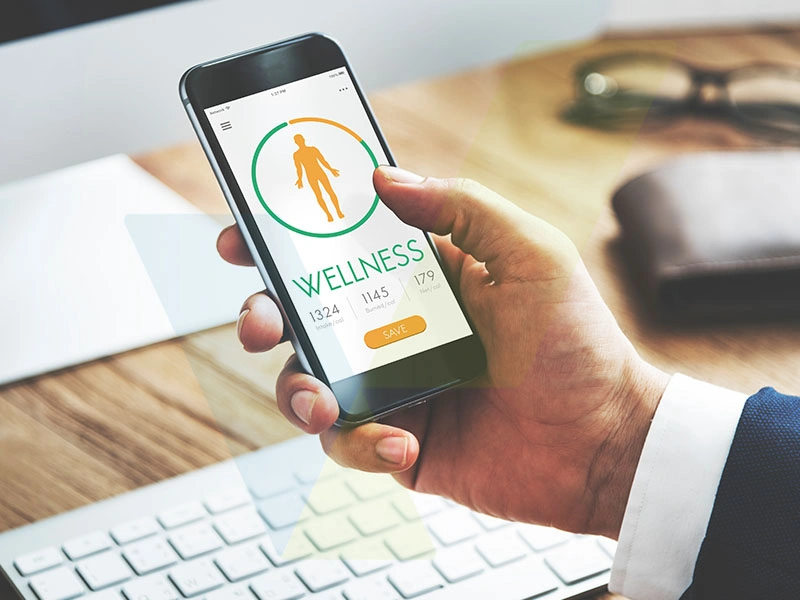
This is the trend missing from almost every other list you’ll read this year, which is strange given how many patients already want it.
RXNT’s research found 55 percent of US consumers prefer using a mobile app to manage appointments, prescriptions, and medical records, and 35 percent said they’d switch providers entirely for a better digital experience. Nine in ten patients already carry a smartphone capable of running one. You don’t need custom software built from scratch. Most EHR and CRM platforms already include a white labeled patient app, branded with your practice name, ready to turn on.
Use it for the basics first: appointment reminders, refill requests, secure messages to your front desk instead of a hold queue. That’s enough to keep a patient from shopping around when a competitor’s app turns the same task into ten seconds instead of a phone call.
4. Offer telehealth services
Telehealth’s real growth in 2026 sits in two specific places: outpatient follow ups and behavioral health, the services people are finally returning to after putting them off for a few years.
That’s where your telehealth messaging should point, instead of the generic see a doctor from your couch copy every competitor already wrote back in 2021. Build one dedicated landing page that’s honest about what’s virtual and what isn’t. Use a quick virtual consult as the front door, the fifteen minute version of your service, then offer the in person or diagnostic follow up once trust is established.
That funnel does double duty. It removes the biggest objection a patient has, whether this will actually work over video, and gets them into your system before they’ve met anyone on your staff. Mention typical wait times for both the virtual and in person option right on the page. Patients choosing between the two almost always pick whichever one gets them seen faster.
5. Optimize for voice search
Voice search gets one lazy paragraph in most healthcare marketing roundups, usually with zero data behind it. The data that actually exists is specific enough to act on.
Research from Zion and Zion found 65 percent of healthcare related voice searches are about symptoms or treatment information, and close to a third of people use voice search specifically to find a doctor. When someone asks Alexa or Google Assistant what causes a sharp pain in the lower back, the answer usually pulls from the same structured, question and answer content that wins at answer engine optimization, the engine behind AI in healthcare marketing trends 2026.

Write a few pages in natural question and answer phrasing instead of keyword heavy headlines. Keep your Google Business Profile fully filled out, since local voice queries pull from it constantly. You’re making sure the AEO work above also answers the question when it’s spoken instead of typed.
6. Post video content on social media
Video sits near the top of digital marketing trends healthcare for a reason. Patients retain about 95 percent of a message delivered through video, compared to roughly 10 percent through text. That gap alone settles the argument for why this trend isn’t optional.
A physician or staff member answering one real patient question in under sixty seconds, filmed on a phone, usually beats a produced commercial. Patients trust it more because it looks like an actual person talking to them. Among healthcare advertising trends, video also gets 2 to 3 times more engagement than static images on social platforms, which matters when you’re trying to get noticed in a feed instead of a search result.
Pick one person on your team who’s comfortable on camera. Give them a recurring slot, one myth busted or one question answered every week, on Instagram Reels, YouTube Shorts, or TikTok. Consistency beats production value here by a wide margin.
7. Manage your online reputation
The best run practices automate the review request entirely, built into checkout or discharge, so it never depends on a staff member remembering on a busy day.
Over 80 percent of all healthcare reviews happen on Google specifically, according to Birdeye’s research, which makes your Google Business Profile the one surface worth getting right before anywhere else. Practices that switch to automated post visit review requests by text or email often see a 200 to 400 percent increase in monthly review volume. That’s the difference between three reviews from 2019 and thirty from last month.
AI platforms increasingly read the content of your reviews, not just the star rating, to figure out what your practice is actually known for. A review that mentions a fast appointment and a clear explanation tells both patients and AI systems something specific. Respond to every review, good or bad, briefly and like a human.
8. Try influencer partnerships
The influencer that actually moves a healthcare audience is rarely a celebrity. It’s usually local and specific: a fitness instructor your sports medicine practice already knows, or a parenting blogger your pediatric practice has worked with before.
Birdeye’s research recommends picking partners with aligned values and real world knowledge of the space, specifically to keep content both credible and compliant. Compliance shapes healthcare advertising trends more here than in most industries. Sponsored healthcare content still needs a clear disclosure that it’s paid or gifted, and the claims inside it need to stay accurate, the same standard your own ads already have to meet.

Start small. One local micro influencer with an audience that actually overlaps with your patient base will outperform a bigger name with no real connection to what you do. Check who’s already tagging your practice or mentioning you organically. That person already likes you for free, and a small partnership just makes it official.

9. Start a podcast
None of the major 2026 healthcare marketing trend lists mention podcasts. One of the agencies writing those lists runs its own marketing podcast and links to a roundup of the best medical podcasts elsewhere on its site. They clearly think the format works here. They just never told you to use it yourself.
You don’t need a studio. A recurring 15 to 20 minute conversation, a provider or staff member answering the questions patients ask most, works fine recorded on a laptop mic. The audio file itself matters less than everything you can build from it afterward: a blog post from the transcript, a few short social clips, an FAQ page that doubles as answer engine optimization content.
One episode, repurposed well, can fill two weeks of content across every other channel on this list. That’s the actual return on the format, not the download count.
10. Run community health events
A free screening, a lunch and learn at a local senior center, a table at a 5k your practice sponsors. None of this shows up in the 2026 trend reports written for hospital systems, which is exactly why it’s worth doing.
These build a kind of trust that a website can’t replicate, especially with patients who aren’t spending their day online. A Tebra survey of private practices found networking, referrals, and reputation are the activities owners actually report as most successful, ahead of paid advertising. Community events create the moment word of mouth actually happens in, instead of waiting around hoping it does.
Bring a phone and capture it. Photos, a short video, a quick testimonial from someone you helped that day. That content feeds straight back into your social accounts, your Google Business Profile, and the user generated content trend below.
Use user-generated content (UGC)
Reviews are passive. Someone leaves a star rating because you asked, or because they had a strong reaction either way. User generated content is the active version: a patient who creates something themselves, a written testimonial, a short video, a photo they tag your practice in, because they wanted to.
It carries more weight than anything your own marketing department produces, since no one is paying the patient to say it. Make collecting it part of your actual workflow instead of hoping it happens. Ask at checkout or discharge if a patient is willing to record a thirty second testimonial or write a few lines about their experience. Always get explicit written consent before using anything that identifies a patient, given HIPAA, even something as simple as a first name and a photo.
Showcase it on the pages where a new patient is actually deciding whether to book, not on a testimonials page three clicks deep that no one finds.
FAQs: marketing trends in healthcare
How is AI influencing healthcare marketing trends in 2026?
The role of AI in healthcare marketing trends 2026 is now front and center. Tools like ChatGPT and Google’s AI Overviews shape the first step of the patient journey, before anyone lands on your site. That’s pushing practices toward structured, FAQ style content and schema markup, the moves covered above under chatbots and answer engine optimization, instead of chasing keyword rankings alone.
Are email marketing trends still effective for patient engagement?
Yes. Healthcare email marketing trends still drive real retention. Personalized appointment reminders, post visit follow ups, and recall messages keep patients coming back, even as newer channels like apps and chat get more attention. Among healthcare email marketing trends, a simple how did your visit go email the next day keeps a relationship going that a booking confirmation never will.
What digital healthcare marketing trends are effective for small medical practices?
Start with the cheapest, highest return marketing trends in healthcare: an automated review request system, a clean Google Business Profile, FAQ content for answer engine optimization, and a basic chatbot for after hours questions. Layer in community events and user generated content, the marketing trends healthcare practices reach for once those four are running well.
How are healthcare digital marketing trends changing patient acquisition?
What are the top B2B healthcare marketing trends for healthcare organizations?
These b2b healthcare marketing trends serve a different audience than the rest of this list. Providers and referral partners are the target for b2b healthcare marketing trends, not patients. The b2b healthcare marketing trends that matter most for that side of the business: outcomes focused case studies, a real presence at industry conferences, and partnership marketing with the practices already referring you patients.
Conclusion: marketing trends in healthcare
The practices that win these trends in healthcare marketing run answer engine optimization and a decent chatbot alongside the slower work: real reviews and community presence patients actually notice. Software and these digital healthcare marketing trends build the visibility. People still build trust. That balance runs through every one of these marketing trends in healthcare.
You probably don’t need all 11 marketing trends in healthcare at once. MediVerticals will take a free look at what you’re already doing and tell you which 2 or 3 would move your numbers fastest, no pitch attached.

Samantha Leonie