Healthcare Marketing Blogs – MediVerticals



Imagine: You got a great-looking website through o360, got some local SEO traction, and started seeing your practice grow. Then, your budget got tighter. You suddenly realized you were paying for a full-service retainer when you only needed one or two things. That’s when many practices start searching for o360 alternatives. Unfortunately, that search usually leads to a pile of vague listicles that don’t tell you anything useful.
This article is different. We’ll tell you where o360 does well and where it actually falls short. We will also give you a complete breakdown of the best o360 alternatives you can find in 2026. Each one is matched to specific practice types and budgets. By the end, you’ll know exactly which option fits your situation, not just that options exist.
Table of Contents

What o360 does well in o360 competitors analysis
Here’re some reasons why people choose to go with o360 in their healthcare practices.
Healthcare & Dental website design
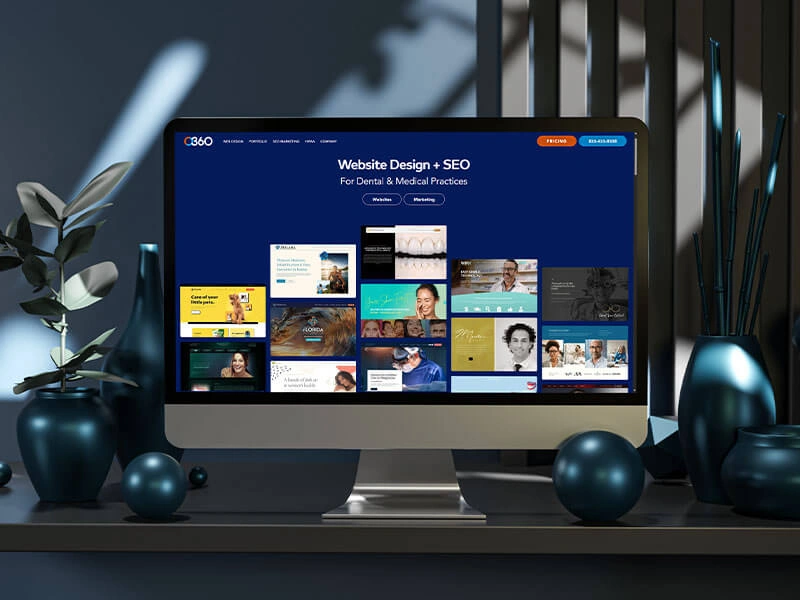
o360’s biggest strength is its website design.
Every site is built from scratch, not pulled from a template library. That matters more than it sounds. When running a dental or medical practice, your website is a potential patient’s first impression. If it looks like 200 other practices in your city, you’ve already lost them.
Third-party claims state they have built more than 2,000 unique dental and medical websites. This ranks among the highest in the industry for genuinely custom work. Each site is HIPAA compliant. They also offer SSL encryption, ADA accessibility, mobile responsiveness, and pre-written educational content for patients.
The company was founded by Dr. Sean Fahimi. He is a dentist who spent 15 years in private practice before pivoting to healthcare marketing full-time. That origin matters. The design decisions aren’t made by people guessing at what a dental office needs. Instead, they come from someone who actually ran one.
Practices also own their design outright. They can take it with them if they leave. This is a meaningful protection in an industry where vendor lock-in is a real problem.

SEO & local search optimization
o360’s SEO work is built around patient search intent. They avoid generic keyword stuffing that worked a decade ago. Their local SEO covers Google Business Profile optimization and local citation building. They also manage medical schema markup, on-page optimization, technical SEO (including site speed and crawlability), and mobile performance.
The result is a strong local search presence. It connects your practice’s name directly to the specific procedures and specialties local patients are actually searching for. For solo practices in a single market, this approach works well.
The team understands the healthcare patient journey in a way that general-purpose SEO agencies don’t.
A patient searching for an emergency root canal in a specific zip code has a very distinct intent from someone browsing for a new primary care doctor. o360’s keyword strategy reflects that. Their healthcare marketing programs help practices increase new patient inquiries by 30 to 60 percent within a few months. They achieve this through targeted SEO, Google Ads, and social media.
Paid ads
o360 manages Google, Facebook, and Instagram ad campaigns for healthcare practices. Their PPC model focuses on geo and demographic targeting, which is exactly what a local practice needs.
You’re not paying for impressions from people three states away.You also avoid targeting age groups who statistically don’t visit your specialty.
Their marketing team actively manages and refines campaigns. They do this with a deep understanding of healthcare patient behavior and compliance requirements.
Furthermore, there are no long-term contracts on the PPC side. This gives practices flexibility to scale based on their actual patient volume goals.
The budget control is also practitioner-friendly. Doctors can set their own ad budgets and adjust them month to month. For a solo dentist who wants to test paid patient acquisition without committing to a large monthly spend, that flexibility is worth something real.


Reputation management
Online reputation is everything in healthcare. A practice with a 4.2-star Google rating and 40 reviews is invisible next to a competitor with 4.8 stars and 300 reviews. This holds true even if the clinical quality is identical.
o360’s reputation management service handles review generation, monitoring, and integration with local listings. It’s bundled into their broader marketing packages. This means it works in sync with the SEO and website work, rather than operating as a disconnected tool the front desk has to manage separately.
This bundled approach is one of o360’s genuine strengths. They’ve earned a 5-star ranking from Google reviewers. This suggests the delivery team practices what they preach when it comes to reputation management. Before diving into o360 reviews on third-party sites, this is the baseline: a strong product with real limitations.

Where o360 falls short in alternatives to o360
Here’re some of the reasons why practices seek the best o306 alternatives.


Prices are high for small practices
o360 doesn’t publish pricing. To get a number, you fill out a request form and wait for a call. That’s not unusual for full-service agencies, but o360 pricing works this way by design. It signals a structure that doesn’t lend itself to transparency or comparison.
Practitioners who’ve worked with large healthcare marketing agencies consistently report a common trend.
The overhead of running a full-service agency gets passed down to the client. This includes expenses for account managers, sales teams, and bundled service tiers. Nina Interactive’s research specifically identifies this as the most common complaint dentists raise after working with larger agencies.
For a solo general dentist in year 2 of their practice, paying for a comprehensive retainer is a real financial strain. They often end up paying for services they won’t use for another 18 months. o360 pricing isn’t designed for modular needs. Small practices need to pick what they actually use. However, o360’s model is built around a complete package rather than a pick-what-you-need structure.


Limited transparency in campaign performance
When spending money on marketing, you need to know which dollar produced which patient. o360 provides reporting, but there’s no publicly documented, real-time analytics dashboard. You cannot easily see the connection between a specific ad click and an actual booked appointment.
That gap matters because modern healthcare marketing attribution has advanced significantly. Agencies like Intrepy Healthcare Marketing built proprietary dashboards. These tools tie marketing leads directly to EHR patient records. Because of this, you can see that a specific Google Ads campaign produced 14 new appointments last month, not just 200 clicks.
Similarly, Healthcare Success gives clients 24/7 access to a HIPAA-compliant reporting dashboard with call tracking. When evaluating o360 alternatives, attribution depth is one of the sharpest questions to ask. Can they show you which campaign filled your chair, or are they just showing you traffic and impressions?
Dependency on full-service retainers
o360 is a full-service agency. That’s a strength when you need everything, but it’s a problem when you don’t. Practices that have already built a solid website might only need ongoing SEO and reputation management. However, they often find themselves paying for an all-inclusive package. This means paying for web maintenance, content, social media, and ads, even when those services aren’t active priorities.
Nina Interactive’s research (Ninainteractive.com) on dentist frustrations with marketing agencies identified this specifically. The push for ongoing retainers, whether needed or not, is one of the most common complaints practitioners raise after working with larger agencies. The bundled model benefits the agency’s revenue predictability more than it benefits a practice’s actual marketing needs at any given stage of growth.


Scalability challenges for multi-location practices
o360 is built around individual practices. Consider a dental group with 6 locations and separate patient demographics in each market. They need an agency infrastructure that can build location-level targeting, budgeting, and reporting simultaneously. They also need to roll all of it up into a single executive view.
Cardinal Digital Marketing built its entire model around that specific problem. Their enterprise healthcare clients run dozens of locations. Cardinal’s campaigns are designed to treat each location as its own competitive micro-market.
Among the strongest competitors of o360 for multi-location groups, Cardinal stands out because its infrastructure was purpose-built for it.

Why healthcare providers seek o360 alternatives
Practices don’t outgrow agencies overnight. The process is gradual. A solo chiropractor who signed with o360 to get a website and basic SEO hits year 3 and realizes their needs have completely changed. They want more granular reporting.
They also want their marketing dollars tied to actual patient appointments, not just traffic. If they want to add a second location, they need campaigns that can scale without doubling costs.
KickStart Dental Marketing’s research evaluated why dental marketing fails. They found that cookie-cutter campaigns and set-and-forget management are the top drivers of marketing stagnation. That same pattern shows up in agency relationships when the agency’s model doesn’t adapt as the practice grows. When practices start doing an o360 comparison against other agencies, that’s usually the trigger. Something simply stopped working.
Top o360 alternatives for healthcare practice growth
The 9 alternatives below aren’t a ranked list. They are different fits for different practice situations. Before picking one, run through 3 quick criteria: your practice stage (pre-launch vs. established), your location structure (solo vs. multi-site), and your biggest bottleneck right now. Your bottleneck might be positioning and brand, patient acquisition volume, or recurring content and SEO.
These are the strongest alternatives to o360 and direct competitors of o360 you’ll find in the market right now. A solo physical therapist looking for a cost-effective monthly plan has different needs than a 10-location dental group trying to dominate 3 metro markets. Match the alternative to your actual situation, not just the one with the best website copy.
1. MediVerticals.com
MediVerticals positions itself as an AI-powered healthcare marketing agency built around one clear promise.
They state that marketing should return at least 3 times what you spend within 12 to 24 months.
That’s a specific accountability claim most agencies deliberately avoid making.
Among companies like o360 that serve healthcare practices across multiple verticals, MediVerticals is one of the few that puts a hard number on ROI.
Founded by Ahmad Siddiqui, a Dallas-based serial investor and co-founder of 6 startups, MediVerticals combines experienced healthcare operators with digital marketing experts. They avoid handing your account to a junior coordinator.
The agency covers dental clinics, primary care practices, urgent care centers, and pharmacies.
They also serve diagnostic labs, home care agencies, medical spas, and mental health clinics. Services span website development, SEO, PPC, social media, reputation management, PR, content marketing, and medical animation.
Per their case studies, clients have seen an 80 percent improvement in patient retention rates. They also saw 200 percent increases in organic traffic and 50 percent boosts in online appointment bookings. For established practices that want a partner accountable to outcomes, MediVerticals is worth a serious conversation.


2. Practice Promotions
Practice Promotions is a niche agency built specifically for physical therapy, rehabilitation, and multidisciplinary clinics. It was founded in 2011 by Neil and Amy Trickett. Both are practicing PTs and practice owners.
This means the marketing strategies come from people who’ve sat in the same chair you’re sitting in. They currently serve over 1,200 PT locations across the United States and Canada.
Their services cover websites, SEO, Google Ads, social media, email marketing, and digital newsletters. They also have a multi-location infrastructure for established groups with 3 or more providers across multiple sites. If you’re in PT, rehab, or a multidisciplinary clinic, you might be tired of working with generalist agencies that treat your marketing the same as a pizza chain’s. In that case, Practice Promotions is the most direct fit in the market.
3. Practice Builders
Practice Builders is one of the longer-standing healthcare marketing agencies in the field. They serve solo practices up through multi-specialty groups and urgent care centers. Their philosophy is built around practice survivability, not just growth. Their messaging explicitly addresses what happens to your marketing during recessions, reimbursement cuts, and aggressive competitive pressure from larger groups with bigger ad budgets.
Services include web design, reputation management, video production, e-media solutions, and new patient acquisition campaigns. The agency also integrates staff training and patient experience into its approach, which is rare. Most agencies treat marketing as separate from operations. Practice Builders argues, correctly, that a great campaign sending patients to a poorly run front desk is wasted money. For practices that have been burned before and want a more conservative, ROI-defensive approach to marketing, Practice Builders fits.


4. Intrepy Healthcare Marketing
Intrepy Healthcare Marketing has focused exclusively on healthcare since 2014. They work only with private medical practices and healthcare organizations. Their standout feature is attribution. They built a proprietary analytics dashboard called the Marketing Growth Dashboard.
This tool connects marketing leads directly to EHR patient records. Because of this, you can see which campaigns produced actual appointments, not just form fills or phone calls. For specialty practices where each new patient has significant lifetime value, that attribution layer is critical. It is the difference between knowing your marketing works and just hoping it does.
Intrepy covers 40-plus medical subspecialties including orthopedics, cardiology, and urgent care. They offer medical SEO, website design, Google Ads, programmatic display, social ads, and remarketing. Their social media service is fully managed, meaning your team doesn’t have to touch it. For mid-size specialty practices that have been running marketing for a while and want to finally understand what’s actually working, Intrepy is one of the sharpest o360 alternatives in the space.
5. Cardinal Digital Marketing
Cardinal Digital Marketing is built for healthcare at scale. Based in Atlanta, their client roster includes urgent care networks, behavioral health providers, DSOs, and multi-site specialty practices. The agency’s core strength is multi-location infrastructure. Each location in a group gets its own targeting, budget, and reporting. All of this rolls up into a single enterprise-level view.
They use the RevRx analytics platform for channel mix modeling and ROI measurement. They also run campaigns on Google, Meta, and TikTok. Their depth in paid media is particularly strong. As noted in their case studies, clients have seen a 116 percent increase in lead volume and a 77 percent increase in conversion rate. If you’re managing a dental group with 5 or more locations, or a healthcare network where each site competes in its own local market, Cardinal has the operational infrastructure to handle it.


6. Healthcare Success
Healthcare Success is a full-service medical marketing agency. They cover hospitals, multilocation medical and dental groups, pharma, Medicare Advantage plans, addiction treatment centers, and long-term care organizations. Their digital marketing services include a 24/7 HIPAA-compliant reporting dashboard and call tracking. These tools give clients real-time visibility into campaign performance without waiting for a monthly report.
Per their own published cost guide, mid-tier healthcare organizations typically start core retainers at around $10,000 per month. To put that in context against o360 pricing, which isn’t published publicly, Healthcare Success sits at the higher end of the market. This puts them out of range for solo or small practices.
However, for healthcare organizations that want a partner who will educate them alongside serving them, the depth of expertise is justified. They publish a blog with 30,000-plus subscribers. They also cover branding, creative, paid search, social, SEO, content, traditional media, reputation management, and web design all under one roof.
7. Designity
Designity operates on a Creative-as-a-Service model. This structure is fundamentally different from every other option on this list. Instead of a retainer with a fixed set of deliverables, you get on-demand access to vetted, US-based creative talent. This covers 100-plus design and marketing categories, including web design, copywriting, graphic design, video, motion graphics, social media content, and SEO. Each account is managed by a designated Creative Director who sources the team and keeps projects on track.
They use flat-rate subscription pricing. This structure runs significantly lower than traditional agency retainers, and it includes unlimited project requests and revisions. Their options run up to 70 percent more cost-effective than traditional agencies while maintaining premium service quality. Healthcare clients include Mimio Health, Endo Pharmaceuticals, and Werking Health. Designity is the right fit for practices that need a burst of creative output, like a full rebrand, a new site, or an ad campaign refresh. It saves you from locking into a 12-month retainer for services you’ll only need for 3 months.


8. Med Rank Interactive
Med Rank Interactive works exclusively with healthcare and dental practices. They have one policy that immediately separates them from most agencies: they only take 3 dental practices per city. This means they aren’t running your SEO campaign while simultaneously managing your direct competitor two blocks away. Territory exclusivity is a meaningful trust signal in an industry where agencies often service competing practices in the same market.
Their services include local SEO, Google Ads, Local Services Ads, social media, web design, reputation management, and data analytics. All of these are bundled at one monthly price on month-to-month contracts. You own your website, your data, and your accounts if you leave. Based on their Charlotte page, one of their dental clients went from $558,000 in annual production to $906,000 in a single year. That is a 62 percent increase. For independent practices in competitive local markets who want exclusivity and no lock-in, Med Rank Interactive is a strong choice.
9. DentalROI
DentalROI is a dental-specific agency that wraps its marketing services inside an AI-powered practice platform. On top of standard website design, SEO, PPC, and reputation management, their dashboard includes call tracking with recorded calls. It also features lead analytics, text-to-pay, membership plan management, soft credit checks, and two-way texting with patients. As a Google Partner, they also have preferential access to campaign support and beta features.
The call recording feature alone is worth paying attention to. Most practices lose patients at the front desk, not in their marketing campaigns. When the phone rings and staff don’t convert the inquiry, no amount of great SEO fixes that. DentalROI’s recorded calls give practice owners a training tool that’s directly tied to patient acquisition. If your front desk conversion is a known weak point, this platform addresses the problem at the source.


Why clinics are choosing MediVerticals as an o360 alternatives
Most agencies will tell you they deliver results. MediVerticals puts a specific number on it: your marketing investment should return at least 3 times what you spend within 12 to 24 months. That kind of accountability commitment is rare because most agencies know they can’t back it up. MediVerticals can. They built the agency around experienced healthcare operators and AI-powered execution, rather than generalist marketers applying dental templates.
The agency covers more practice types than any other option on this list. They serve dental clinics, primary care, urgent care, pharmacies, diagnostic labs, home care agencies, medical spas, and mental health clinics. Their service stack spans website development, SEO, PPC, social media, reputation management, PR, content marketing, and medical animation. This gives practices a single partner across every channel rather than stitching together 3 different vendors.
If you’ve looked through o360 reviews and companies like o360 trying to find a partner that ties marketing to revenue, MediVerticals is where that conversation usually ends. Per their case studies, clients have seen an 80 percent improvement in patient retention rates. They also achieved 200 percent increases in organic traffic and 50 percent gains in online appointment bookings. For practices ready to treat marketing as a revenue channel, MediVerticals is where the conversation starts.
FAQs on o360 alternatives
Why do healthcare providers look for o360 alternatives?
Most practices start looking for alternatives to o360 when their needs outpace the model they signed up for. o360 pricing transparency is a common trigger. Rates aren’t published publicly, and you can only get a quote through a request form. Retainer dependency is another issue, since bundled services mean paying for things you don’t currently need. Finally, scalability becomes the issue for practices adding locations. o360’s model was built around individual practices, not enterprise dental groups managing campaigns across multiple local markets.
What should I compare during an o360 comparison?
Are o360 competitors more affordable for small practices?
It depends entirely on the model. Subscription-based services like Designity run at a significantly lower monthly cost than traditional agency retainers. Specialist agencies similar to o360, like Med Rank Interactive, offer bundled pricing at lower entry points than comprehensive full-service packages. On the other hand, larger o360 competitors like Cardinal Digital Marketing and Healthcare Success are actually more expensive than o360. The right question isn’t which is cheapest, but which delivers the best return for your specific practice size and stage.
Which agencies similar to o360 offer healthcare SEO services?
Agencies similar to o360 that focus specifically on healthcare SEO include Intrepy Healthcare Marketing, Med Rank Interactive, MediVerticals, Cardinal Digital Marketing, and Practice Promotions. Intrepy is the strongest for mid-size specialty practices that need attribution data tied to actual appointments. Med Rank Interactive is the best fit for independent practices in competitive local markets who want territory exclusivity. MediVerticals covers the broadest range of practice types with the most complete service stack.
How can I evaluate o360 reviews before choosing a marketing partner?
Start with Google reviews but look for specifics, not just star ratings. Testimonials that mention named results, timeframes, and measurable patient volume increases are more reliable than generic praise. Check Glassdoor as well, because employee experience tells you a lot about how an agency actually delivers work.
Before signing with any agency, ask for a live demo of their reporting dashboard. If they can’t show you in real time how they track and report campaign performance, that’s a signal worth taking seriously. Apply this same evaluation to all competitors of o360 on this list. Be sure to compare o360 pricing against each agency’s published or quoted rates before committing.
Conclusion: o360 competitors
o360 built a strong reputation for custom healthcare website design and local SEO for good reason. For a solo practice building its first real digital presence, it’s a solid option. But as practices grow, budgets shift, and expectations around reporting rise, the fit changes. The 9 alternatives covered here serve different practice stages, different budgets, and different bottlenecks. If you’re ready to treat marketing as a revenue investment and want a partner that holds itself accountable to outcomes, start the conversation with MediVerticals. The rest of the list is your backup depending on your specific situation.
