Revision History
Updated publication: Oct 7, 2026
Author: Samantha Leonie
Original Publication: Sep 25, 2026
Author: Samantha Leonie
Healthcare Marketing Blogs – MediVerticals


A patient in your waiting room right now probably didn’t find you the way patients did five years ago. Before she ever called your front desk, there’s a good chance she asked Chat GPT or Google’s AI Overview who’s good near her, and by the time she dialed, she’d already made up her mind. According to Patient Engagement HIT, patient use of AI to find a new provider jumped from 31% at the end of 2025 to 47% just a few months into 2026. That’s not a fringe behavior anymore. That’s close to half your next new-patient pool making decisions before your website ever loads. AEO for healthcare is what determines whether your practice is one of the names that pops up on her screen.
This guide covers what’s changed in patient search, four specific strategies for structuring content so AI engines trust and cite it, which AEO tools for healthcare companies are worth knowing about, what a real AEO agency actually does, and a short list of checks you can run on your own site this week. Nothing here promises a guaranteed spot in an AI answer, because nobody can promise that honestly. Answer engine optimization for healthcare is about improving your odds, not buying a guarantee.

Search used to mean typing three or four words and scanning ten blue links. Now patients type full questions and expect a synthesized answer, often with a short list of who to trust attached to it. Contently reports that AI search visits grew nearly 43% year over year, while Google search visits grew only about 2%, and the gap is still widening. For practice, that’s more than an abstract trend. It’s a second front door that either has your name on it or doesn’t.
Healthcare marketing strategies show this shift especially clearly. Of ChatGPT’s more than 800 million weekly users, Fierce Healthcare reports that OpenAI says roughly one in four submits a healthcare-related prompt every week. And it isn’t evenly spread across age groups: Gallup found that 69% of adults from 18 to 29 say they research health questions with AI before ever seeing a doctor, compared with 43% of those 65 and older. If your patient base skews younger, that gap matters more than most of what’s in typical healthcare marketing trends.

AI engines don’t treat every topic the same way. Google classifies health content under YMYL, “Your Money or Your Life,” meaning bad information here causes real harm, so the trust bar sits higher than it does for almost anything else online. Engines reward what the industry shorthand calls E-E-A-T: Experience, Expertise, Authoritativeness, and Trustworthiness. For a clinic, that translates into content written or reviewed by someone with real credentials, claims that are specific and current instead of vague, and a practice identity that reads the same everywhere it appears online.
Here’s the part most AEO guides for healthcare companies skip: getting cited also means not getting flagged. Outcome language needs to stay honest: “can help with” instead of “will fix,” and if your team publishes anything that reads like a clinical claim, it should go through the same reviewer who’d sign off on a patient handout, not just whoever wrote the page. This isn’t a separate compliance chore bolted onto AEO for healthcare. It’s the same trust signal an AI engine is scanning for, just written for a human legal standard instead of a machine one.
Most AEO advice stops at “structure your content well,” which isn’t specific enough to act on. Here are four strategies that are, each with what it actually moves.



Start free with the best AEO tools for healthcare content marketing before you pay for anything; then start pay to healthcare content marketing agency. Let Google show you how you are doing in AI Overviews and AI mode. According to the Google Search Central blog, Google announced the release of a new dedicated Generative AI performance report within Search Console back in June 2026, which shows publishers a direct, native view of how often their pages are appearing within AI overviews and in AI mode. This new report is impressions-only, with no clicks or query reporting just yet, and it’s still being rolled out to additional properties, but this is the place to watch before you buy any healthcare AEO tools for healthcare brands. Use Google’s Rich Results Test on your most important pages to see what, if anything, Google can read.
When you’re ready to pay for healthcare AEO tools, though, an AI-visibility platform will tell you if your practice gets mentioned by your prospective audience across multiple engines, not just Google. AEO tools for healthcare companies, there’s generally an entry-level market, and then the larger, agency-level market. Marketful reports, for instance, that Otterly.ai can monitor mentions and citations for brands across ChatGPT, Perplexity, and Google AI Overviews for $29/month and up, but tools suited to a company that manages multiple practices usually are in the $100/month and up range. Whichever AEO tools for healthcare brands you evaluate to encourage personal branding for doctors, the real question is the same one you’d ask about any dashboard: will someone on your team actually look at it every month, or will it become another login nobody opens?

A capable AEO agency for healthcare does three things well for reputation management: gets your structured data right and keeps it maintained as your site changes, builds content architecture around how your actual patients search, and tracks whether you’re getting cited over time instead of guessing. What a good one won’t do is promise a guaranteed citation, because no agency controls what an AI engine chooses to surface.
Before hiring any AEO agency for healthcare marketing, teams tend to shortlist and ask direct questions. Do they show results tied to a specific page and time period, or only vague totals? Do they maintain schema after launch, or install it once and move on? Do they track whether you’re actually named in AI answers, or only whether you rank in traditional search? A consultant who answers those plainly, with real numbers attached, is worth a longer conversation than one who answers in adjectives.
Contact Mediverticals for top healthcare SEO and AEO services for healthcare.
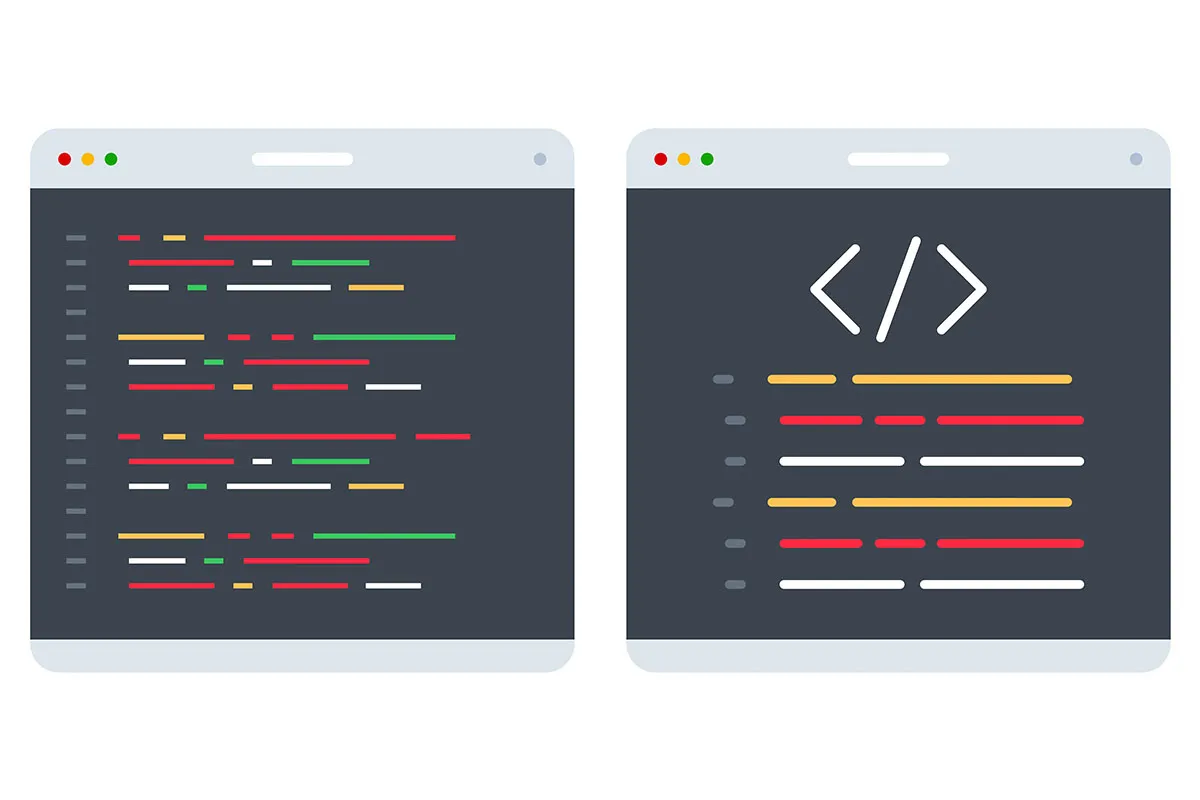
Schema markup is structured data, a machine-readable label that tells an engine “this is a physician,” “this is a service,” “this is an FAQ.” Pages using schema to earn rich results see meaningfully higher click-through rates than pages without it meaningfully, and most website platforms, including popular website builders, don’t add healthcare-specific schema automatically. Your FAQ content gets no FAQPage markup, and your providers get no Physician markup unless someone installs it directly.
The types that matter most for a clinic are MedicalOrganization or HealthcareOrganization for your practice, Physician for each provider, and FAQPage for your question-and-answer content to first collaborate for AEO consulting firms healthcare marketing. Read this quick guide on schema markup for beginners.
Two rules matter more than the code itself: the markup has to match what’s visible on the page exactly, and it has to get updated every time the page content changes, or you end up with a mismatch that does more harm than having no markup at all.

Anyone selling this work owes you the limits along with the pitch. AEO for healthcare can’t guarantee a citation. Engines choose their own sources, and nobody controls that choice from the outside. It doesn’t substitute for your reputation either. A practice with bad reviews and no presence beyond its own website won’t make its way into an AI recommendation, because engines lean on sources beyond your site to verify what you’re claiming about yourself.
It also isn’t a project you finish once. Engines favor recently updated and actively maintained content, so pages that go stale lose ground to competitors who keep their pages updated. Getting named is only half the job, though. If a patient clicks through and she can’t find a clear way to book, or the page reads like a clinical journal instead of a person talking to her, she will leave, and no amount of AI visibility can fix that on its own.

Treat Answer engine optimization for healthcare as an operating rhythm, something that requires consistent updates. A reasonable pace looks like a quarterly content refresh on your highest-value pages, a quarterly pass through your schema to catch anything that’s drifted out of sync with the page it describes, and a quarterly check of your own AI-citation status using a free or paid tool.
For measurement, watch three things over time:
A practice that tracks all three has a real idea of whether its AEO for healthcare companies’ investment is working.
You don’t need a consultant to find out where you stand today. Run these five checks, most of which take under an hour combined:

They share the same foundation: quality content, technical health, credible authority, but the goal differs. Healthcare SEO agency optimizes for a ranked position in a list of links, while Answer engine optimization for healthcare optimizes for being named directly inside an AI-generated answer, which is a different kind of visibility with a different measurement.
Yes, and it usually should. ChatGPT, Perplexity, and Google’s AI features don’t all retrieve or weigh content the same way, so a practice that only optimizes for one engine is leaving visibility on the table with the others.
Yes. A single-location practice can apply the same four strategies covered above, answer-first content, one definitive page per topic, real provider pages, and search-shaped architecture, without needing an enterprise budget or a large in-house team.
Not usually. Most of the highest-leverage fixes, like rewriting page openings, adding schema, restructuring provider pages, can happen without touching your site’s design or platform, and it may not significantly impact medical website design cost.
Ask for results tied to specific pages and time periods, confirm they maintain schema after launch rather than installing it once, and ask directly whether they track AI citations or only traditional rankings.
Patients are already asking AI assistants who to trust with their care, and that share is only growing. AEO for healthcare would not guarantee your practice is the name that comes back, but answer-first content, real provider pages, working schema, and a habit of checking your own visibility will put you in a real position to earn it. Start with the five checks above this week, and treat what they show you as a diagnosis, not a debate.
Mediverticals is a healthcare marketing team that works exclusively with medical practices and clinics across the U.S., helping them get found by patients wherever those patients are searching: Google, ChatGPT, Perplexity, or otherwise. We handle the technical side (schema, site structure, Search Console) and the content side (provider pages, FAQs, specialty-specific strategy) so your team doesn’t have to become AI search experts on top of running a practice. If you want a clear read on where your practice stands today, book your call, and we’ll walk you through it.

No authors found.