Healthcare Marketing Blogs – MediVerticals



Artificial Intelligence (AI) is evolving day by day in healthcare settings. Technology impacts more on the services in healthcare and the management of information. It helps to interpret the medical images and healthcare delivery during clinical visits of patients. The transformation of healthcare takes place with the help of AI tools for healthcare in 2026. The use of healthcare AI automation involves patient recognition through data, the flow of work in healthcare setups, and clinical decisions. The use of healthcare AI automation helps professionals to complement their skills and knowledge and provide a more efficient working environment.
Artificial Intelligence (AI) is also another breakthrough in digital healthcare, and the use cases are increasing in the healthcare industry. Medical facilities have electronic health records, diagnostic images, lab results, prescriptions, insurance information, and patient correspondence today. The evolution of AI tools for healthcare helps to manage the data for pattern recognition, summarization, and managing tasks. AI offers different sorts of possibilities for medical care, including diagnostic imaging, virtual assistance, and other innovative applications.
Table of Contents

AI Tools for Healthcare and the Evolution of Digital Healthcare
The role of artificial intelligence tools in healthcare technology has transitioned from just storing the patient’s data in electronic health records to extracting the data and making complex processes from it. Not only are these advanced systems storing information, but they are also capable of analyzing it and identifying patterns that could be beneficial in clinical healthcare. Platforms for imaging can help identify abnormalities, and documentation tools can help turn conversations into structured notes.
There are different types of health care tools that can also help in scheduling, communication, patient communication, and planning. In healthcare, the innovative artificial intelligence tools in healthcare demonstrate the wide range of possibilities of technology. Some focus on diagnosis and medical imaging, and there are medical imaging systems that focus on documentation, on communication, and on administration.
The examples below are just some of the different use cases for AI tools in healthcare. It shows the potential of using AI to help health care professionals, not replacing them. Each tool will have a different purpose, and should be considered in terms of its purpose, evidence, integration, and aspects of patient safety.
1. Viz.ai
Viz.ai is an AI-powered care coordination platform that leverages medical imaging and clinical data to help healthcare teams detect potentially serious conditions and coordinate care. It provides technology that can review data from imaging studies and alert those who may need to act. This would make Viz.ai an example of AI in patient care where timely communication can affect the treatment progress. AI can assist health providers in identifying relevant information so that they don’t rely solely on manual review and communication. Like all AI healthcare solutions, expert review is critical prior to clinical decision-making.
2. Aidoc
Aidoc is an AI company developing software for analyzing medical images, which can detect observations that need additional investigation. It has systems that will work within the clinical workflow to be able to help prioritize potentially urgent cases. Large-scale volumes of imaging studies can be challenging for radiology departments to manage, particularly when prioritizing workflow.
Aidoc shows the potential of AI tools for health care to help clinicians identify cases that require further investigation. It helps with real-world applications in the healthcare sector when immediate interpretation is essential.
3. PathAI
PathAI is dedicated to AI solutions in pathology. It provides technology for analyzing pathology images and assisting in diagnostic workflow, research, and drug development. Pathology images are rich with information that may need scrutiny by trained professionals. AI can help by recognizing patterns, quantifying attributes, or maintaining similarity in image processing. AI path shows that imaging is not limited to radiology, but it can be used for pathology as well.
4. Butterfly Network
The Butterfly Network is the merger of portable ultrasound, software, and AI solutions. Doctors can use handheld ultrasound technology to image areas where standard ultrasound equipment may not be available.
The AI-powered ultrasound allows healthcare providers to delve deeper into the data and perform some evaluations more effectively. This helps to assist the AI patient care at the bedside.
5. Glass Health
Glass Health AI tool helps with documentation and clinical intelligence to support healthcare professionals. It can help answer clinical questions, record medical information, and more. Doctors and medical staff frequently take time to look up reports and create paperwork. AI can assist with organizing this work and provide easier access to relevant information.
Glass Health is therefore one of the examples of AI tools for healthcare to benefit clinical workflows. Artificial intelligence-generated information should be checked by qualified professionals before it is applied to patients and focuses mainly on AI in patient care.
6. Ada Health
Ada Health offers an AI-powered symptom evaluation platform. The system can accept data about the user’s symptoms and offer potential explanations of the symptoms and related health data. These kinds of platforms may support individuals structure information prior to communicating with a health care provider. It should not be used as a substitute for a professional diagnosis.
This kind of technology should be used to assist in health information and navigation of health care. Another instance of direct patient interaction with AI tools for healthcare is their ability to assist in clinical decision-making without taking the place of doctors. Another example involves the direct engagement of healthcare tools with patients, while maintaining a clear separation between AI assistance and medical decision-making.
7. OhMD
OhMD provides digital patient communication services such as messaging, scheduling, reminders and more. The AI ability may help to manage common patient inquiries and streamline a portion of the patient interaction process. There is a significant amount of staff time required for communicating, especially if teams are taking on the task of reiterating appointment and schedule inquiries. The automation of AI driven healthcare helps to make the tasks more streamlined and reduce repetitive work. It collectively supports healthcare professionals for better customized care of patients.

AI in Healthcare Tools and Core Artificial Intelligence Technologies
AI-powered healthcare tools are based on multiple AI technologies. Machine Learning and NLP can enable a system to learn from data and identify patterns, comprehend, and generate human language.
AI systems analyze the medical images through Computer Vision (CV), while Generative AI generates text from images, and it summarizes the content from images.
There is various AI tools designed for productivity in healthcare to manage tasks. For instance, an AI medical scribe may focus on speech and written information, while another tool of AI helps to analyze the medical images, such as X-rays. Ultrasound etc.
1. Holly AI
Holly AI helps to manage healthcare practices and reduce the overwork of front-end patient communication tasks. It may offer various features such as scheduling, appointment modifications, reminders, recalls, and others. These functions of healthcare automation help the industry of AI in patient care.
AI reduces the workload by automating repetitive tasks to mainly focus on patient intervention. Holly AI is a prime instance of AI tools for healthcare that are primarily concerned with practice operations.
2. Heidi AI
It is an AI medical scribe that is designed to support healthcare professionals in clinical documentation. It transcribes the medical consultations, which provide structured clinical notes and other documents.
The clinical documentation is time-consuming; therefore, this AI scribing software makes it easier to convert the consultations into structured notes. This can contribute to the benefits of using AI driven healthcare, particularly when documentation takes time away from direct interaction with patients. It should be noted, however, that AI-generated notes should be checked for accuracy by a clinician before use as part of a medical record.

AI Use Cases in Healthcare Across Clinical and Administrative Settings
The range of AI use cases in healthcare continues to expand. AI can assist in medical imaging, clinical documentation, patient communication, research, predictive analytics, scheduling, and operational planning. These applications can run in the background and still impact the relationship between healthcare professionals and patients and the healthcare system.
AI in healthcare offers multi-functionality to structure patient information, facilitate the workflow through easy communications, and focus on the highlighted areas of interest. From the management perspective, AI in healthcare automates the outreach of patients, reminders, referrals, documentation, and scheduling. When used correctly, these healthcare tools can supplement current workflows to simplify the work of healthcare staff.



Healthcare Tools for Medical Data Management and Analysis
The data provided by the healthcare organizations is more than enough daily. These records are used to support AI in patient care and help with research as well. It includes the laboratory results, medical images, genomic data, and other clinical notes. Healthcare tools leveraging AI have become crucial, partly due to their ability to handle such datasets.
AI can supplement human work in data analysis for large data sets. It can identify patterns, and can sort information, and assist workers in finding relevant information. These features are just a glimpse of what AI can achieve in healthcare, notably for organizations grappling with intricate information settings. However, the ability of the system to ensure data quality and validation is still important for reliable results.
1. Tempus
Tempus leverages AI and big clinical and molecular data to power precision medicine, research, and health care decisions. It incorporates other medical information types, using technology, to generate insights and information for clinicians and researchers. This type of data integration can be helpful when deciding to plan when appropriate clinical data is present.
The transformative power of AI tools for healthcare, particularly in using the power of ‘tempus’ to convert vast amounts of data into meaningful information, is a key aspect of the technology that helps to drive this shift. Other applications could be related to ai in patient care, such as assisting with more data-driven treatment and clinical planning.
2. Merative
Merative offers healthcare data, analytics, clinical decision-support and other healthcare technology solutions. It has a portfolio of clinical resources and tools aimed at making it easier for healthcare professionals to access and utilize health information.
Relevant information can be accessed more easily during care with the use of clinical decision-support systems. These should not be used to replace clinical judgment but can be used as additional information to consider. That’s why Merative is an example of an ai tool for healthcare that can enable clinicians to work with complex clinical data more efficiently.

Healthcare AI Automation for Administrative Workflows
Administrative work is one of the strongest areas for healthcare AI automation. Scheduling, patient reminders, referral management through practice management systems, documentation, calls through phone system, and follow-up activities can require significant staff time. The staff and organization have benefited from the automation of the routine steps.
For example, an AI system may provide appointment reminders, handle queries, and initiate follow-up communication. These are the main functions that may support administrative functions by reducing the workflow. Automated systems should include appropriate escalation processes so that complex or sensitive situations can be transferred to a human professional
Qventus
Qventus uses real-time data, behavioral science, and AI/machine learning to support healthcare operations. By using their technology to manage workflows that can affect patient flow, discharge planning, capacity, and more, organizations can unlock their technology. It demonstrates where healthcare AI automation can be used beyond just a single clinical use case and throughout an organization.
Operational AI can help streamline healthcare resources by identifying workflow inefficiencies and coordinating activities. As such, Qvent signifies yet another method by which AI products and services for healthcare can help in healthcare operations.

AI Driven Healthcare and Personalized Patient Experiences
The evolution of AI in the healthcare sector is also reshaping the patient experience of healthcare companies. Artificial Intelligence can be used to provide personalized reminders, educational information, follow-up messages, scheduling, and care navigation. All this can help to improve healthcare communication, but with the added convenience that it can facilitate the handling of many routine interactions. Personalization must be tempered with privacy and suitable human supervision.
Patient information is personal, and AI systems must be secure and well-governed. The goal with AI in healthcare is to streamline the healthcare journey and offer patients the sense that they are not being solely automated. However, the situation is complex and sensitive enough to require human intervention.
AI can also assist companies gain insights into the trends in patient engagement and uncover avenues for strengthened follow-up. If managed properly, these health care tools can help to enhance patient engagement. This is one of the important reasons why the trend of employing ai tools for healthcare has been gaining traction in the era of digital transformation.

Benefits of Using AI in Healthcare for Providers and Patients
The benefits of using AI in healthcare depend on the type of system, its implementation, and the specific healthcare environment. One potential benefit is improved efficiency. AI manages the data with more volume, automates the routine tasks, and helps with the documentation. It helps to decrease the workload and focus more on patient-based information.
AI-driven healthcare functions help healthcare professionals to organize medical information and help the professionals to find information, such as medical imaging, pathological details, and clinical information. AI is also useful for scheduling appointments, collecting patient information, managing health records, and improving communication with patients.
Alongside the feasibility of work, it also poses some serious limitations. It may provide incorrect information, raise privacy concerns, or increase cybersecurity risks. Therefore, complete reliance on AI in healthcare can be potentially harmful; hence, clinical decision-making requires the integration of healthcare providers for optimal patient outcomes.
Future Developments in AI Tools for Healthcare
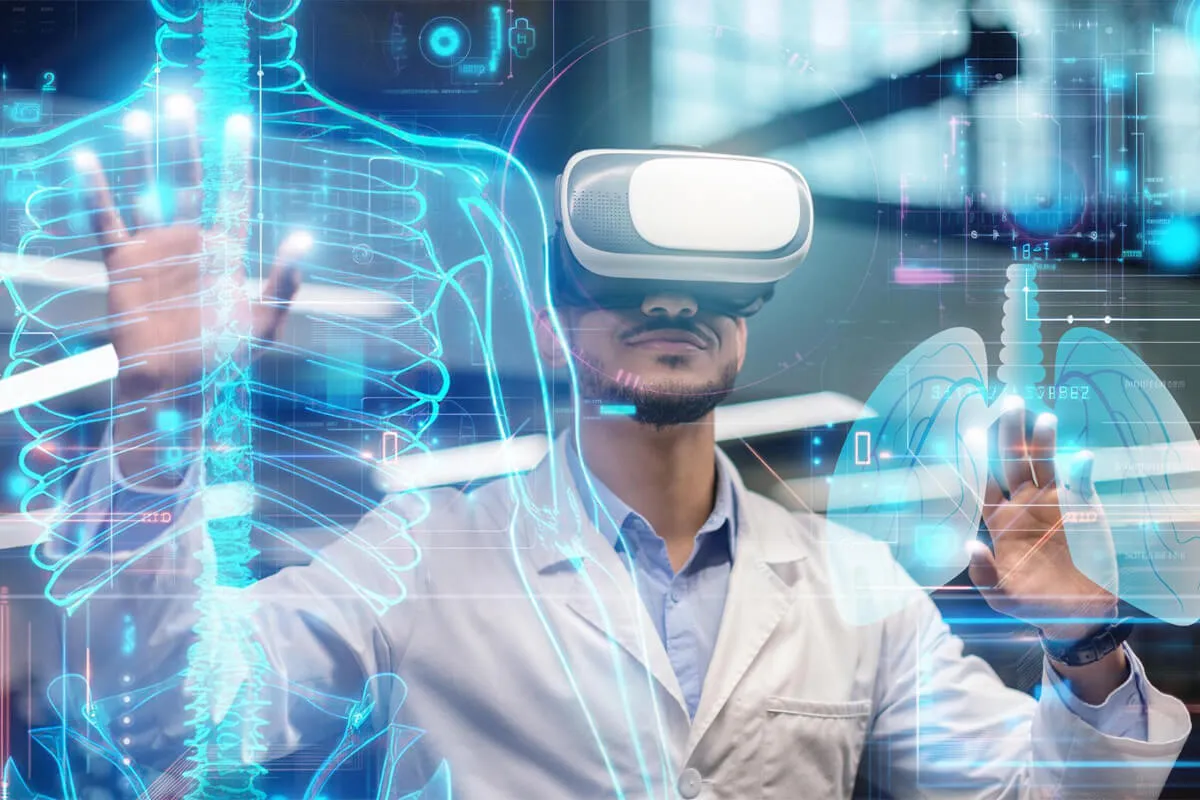
AI becomes more advanced and useful in healthcare organizations. AI tools deal with different tasks at once and provide multiple outcomes from different tasks efficiently. It accommodates several different tasks in one place and performs the documentation, patient communications, medical imaging, and scheduling in healthcare on one platform. AI assistance and the use of generative AI are more common in healthcare for documentation, consultations, scribing, scheduling appointments, and communicating with patients in coordinated care. For organizations, accuracy, privacy, cybersecurity, bias, regulatory requirements, transparency, and human oversight will all be factors.
For the development of AI-driven healthcare, more than just technological advances are necessary. Healthcare organizations should assess the feasibility of using AI to solve a problem, integrate it into existing workflows, and deliver measurable results. The understanding of the strengths and weaknesses of AI will also play a key role in staff training, as professionals will have to be aware of the technology. As technology advances, the applications of AI in healthcare tools could be expected to become even more integral to the healthcare system in the future. Well-governed and professionally managed systems will be better able to achieve the benefits of these systems.
AI Tools for Healthcare-Related FAQs
How do AI tools for healthcare affect the roles of healthcare professionals?
AI tools in healthcare are aimed at facilitating rather than replacing human personnel. They take over repetitive work, can structure information, can support documentation and point to potentially relevant information, without relieving clinicians from the task of professional judgement or patient choice.
What skills do healthcare organizations need to successfully adopt AI tools for healthcare?
Digital literacy, the skills of managing data, cybersecurity awareness, knowledge of AI governance, and staff training are all required. It is equally important for professionals to be aware of the drawbacks of AI-generated content and use human input when it is needed.
How can AI tools for healthcare improve communication between medical staff and patients?
AI-driven healthcare tools for healthcare can improve communication by providing ease in several tasks. It aids in scheduling appointments, sending reminders, communicating with patients, following up, and handling routine questions. As the routine tasks can be handled by automated AI, it reduces the daily workload of repetitive tasks and improves the communication between the patient and the medical staff.
What challenges can organizations face during the implementation of AI tools for healthcare?
The organizations should expect constant monitoring, software updates, regulatory updates, cybersecurity, staff training, data governance, and performance testing. Artificial Intelligence systems must be subjected to a regular audit to ensure their continued support for safe and effective healthcare.
What are the long-term considerations for organizations adopting AI tools for healthcare?
The long-term considerations for organizations should include continuous monitoring, software updates, regulatory changes, cybersecurity, training of staff, data governance, and performance testing. The regular audit of AI systems is essential for safe and effective working in healthcare.
Conclusion
Artificial intelligence is becoming an important part of the digital transformation in healthcare. Healthcare institutions, such as hospitals, labs, and medical practices, are leveraging AI to enhance daily operations and services. AI is being applied in healthcare settings like hospitals, laboratories, and medical practices to boost daily operations and services. AI can be used for many applications, such as patient records, clinical documentation, communication, medical imaging, data analysis, and administrative duties.
AI can streamline healthcare professionals’ tasks, freeing up time for them to focus on delivering quality care. AI can assist with managing information and handling routine tasks, saving healthcare professionals time and easing some of their workload. This means doctors, nurses, and other workers will have more time to devote to patients. But not all the best AI tools are the ones that need the most manual work to run.

Author

Samantha Leonie
Author
Samantha Leonie is a digital marketing manager with expertise in healthcare marketing and patient-focused growth strategies. She leads high-impact digital campaigns that strengthen online visibility, and build trust. Known for her strategic thinking and compliance-driven approach, she delivers marketing solutions that create lasting results.
Fact Checker
No authors found.
Author: Medi Verticals