Healthcare Marketing Blogs – MediVerticals


If you searched for Electronic Health Records (EHR) systems and landed on this page, you must be looking forward to upgrading your clinic, hospital, healthcare center, or private practice with healthcare technology solutions to make day-to-day tasks more efficient and attract more patients.
We know that the selection of the appropriate EHR systems has been a critical strategic focus in 2026. The healthcare sector demands EHR software that can deliver dependable performance across multiple operational settings, enhancing connectivity and workflow. At the same time, it tries to overcome the potential challenges, such as the risk of data breaches, financial costs and loss, and workflow disruption.
However, a quick decision in integrating an EHR system might impede productivity, bringing out the worst consequences. Before you install any EHR system, you must know the pros and cons. Thus, to help you tackle challenges instead of adding to the challenges, we bring you some of the top EHR systems.
Table of Contents

What is an EHR System (Electronic Health Record)?
Before we embark upon the top EHR systems, you must know what this system is, how it is beneficial, and what you should look for to find the most suitable EHR system for your institution.
An EHR system is a safe, electronic system that handles the medical history and healthcare-related data of patients effectively. Such systems enable authorized medical professionals to view, update, and share vital patient information in real time, giving a holistic perspective of providing care. Besides, it’s not only the record-keeping but much more to it!
This system combines innovative technologies like artificial intelligence, cloud computing, and interoperability standards, making sure that patient information can be shared among various facilities, devices, and healthcare teams. It automates routine administrative functions and clinical best practices while improving the quality of care through improved coordination and communication.
As the software continues to evolve, EHR systems can now support predictive analytics, remote patient monitoring, and population health management. It is essential for long-term progress, patient acquisition strategy, and the general modernization of healthcare delivery.
Benefits of Using an EHR System
An EHR system has indeed been beneficial for many establishments, like the well-known Mayo Clinic. Thus, to compete well in this domain and provide healthcare more efficiently, here’s how EHR systems benefit.
- Immediate access to patients’ detailed records and a secure backup through an effective cloud technology in healthcare.
- Enhanced medical coordination and data sharing across healthcare providing individuals, teams, and departments.
- Remote monitoring of patients’ care through video consultation and other means (telemedicine).
- Evidence and research-based decision-making through the integration of generative AI in healthcare.
- Reduced time on manual paperwork and more time for patient care.
- Easy management and handling of any disease outbreak concerning a vast population.
- Results in the acquisition of more patients considering the easy procedures and quick treatments.
Key Features to Look for in an EHR System
Before choosing from the different types of Electronic Health Records systems, the following are some of the key features that you must look for. Otherwise, integration of such a system into your establishment’s operations and healthcare facilities would bring nothing but loss.
- User friendliness of the system to ensure quick learning and efficient usage among the staff and healthcare professionals.
- The EHR software should facilitate data sharing across different systems, like pharmacies and labs.
- An option to customize the system according to your establishment’s needs and interests.
- The EHR system should be able to facilitate reports based on key metrics.
- It should have strong security features to minimize the risk of data breaches.
- Adherence to HIPAA and the local healthcare laws.
- Don’t overlook the cost factor! Consider the initial and ongoing costs and include the charges that apply for maintenance and upgradation.
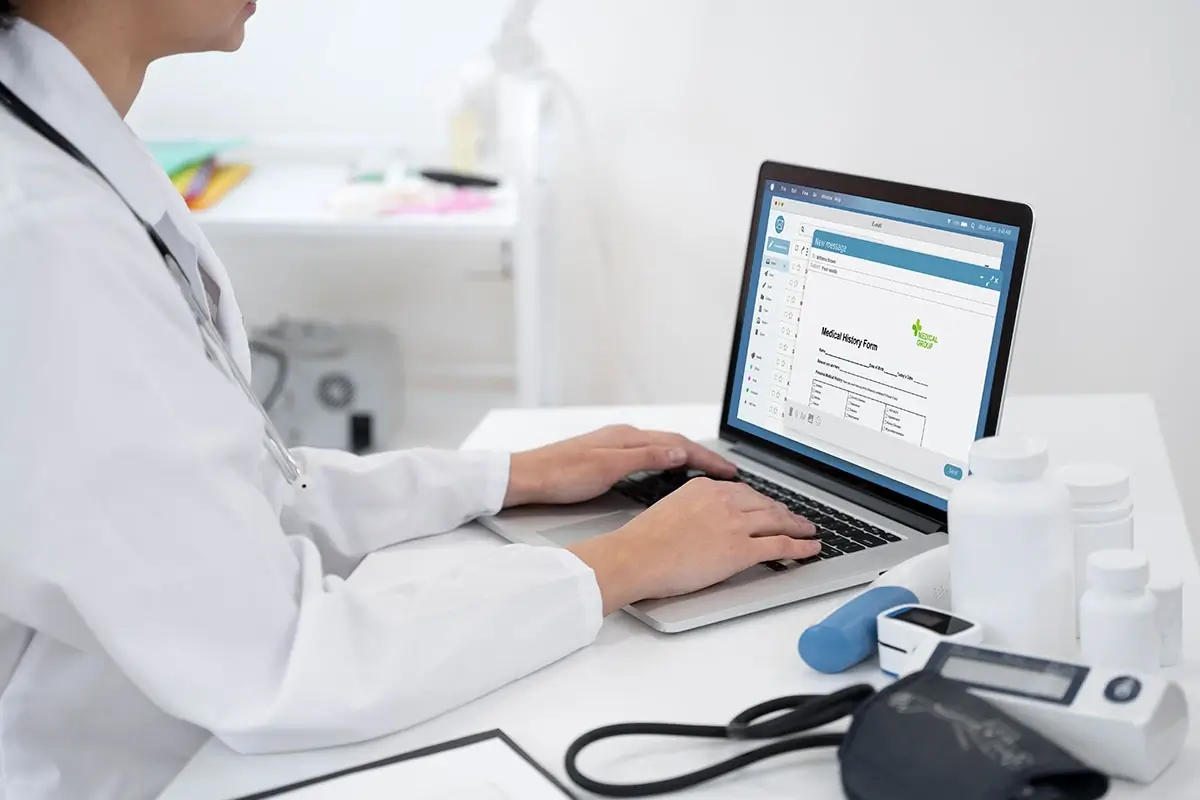
Most Popular EHR Systems
Considering the most popular EHR systems in 2026, there are many options! These top-rated EHR systems consist of all the features that one looks for. Besides, numerous healthcare establishments across the United States have already integrated these systems for better outcomes and long-term progress. Consequently, the improved patient care and patient experience are now being utilized for effective healthcare marketing, changing the healthcare marketing trends gradually!
Nevertheless, here’s the list of EHR systems that are popular for their performance and lead to unprecedented progress in the healthcare domain.



Epic Systems
Epic Systems’ EHR Software is regarded as the most successful EHR system in 2026, particularly concerning the large health systems and integrated delivery networks. It provides the most expansive clinical workflows in inpatient, outpatient, specialty care, and population health, all linked through the current interoperability network of Epic, like Care Everywhere and MyChart patient portal.
Epic comes with some benefits, including a rich clinical and administrative feature set, a scalable infrastructure, and advanced data analytics. Thus, it is suitable for hospitals, academic medical centers, and large organizations with a multispecialty focus. Other benefits like unified patient records, built-in decision support, predictive analytics, and large third-party applications marketplaces are also enjoyed by the healthcare providers.
Its market share dominance, which it boasts of being the largest vendor of hospital EHRs, emphasizes its credibility and reliability in the multifaceted healthcare settings. Besides, Epic is constantly trying to invest in new technologies and AI automation, which can assist clinicians in controlling documentation and providing high-value patient care in any care setting.
Cerner
Cerner is an Oracle Health product, popular in large hospitals and healthcare networks, considering its extensive functionality and the cloud-based design. Cerner’s EHR Software is designed to fulfill clinical, administrative, and financial functions with real-time patient data streams, population health reports, and predictive applications, to assist the providers with informed decision-making at the point of care.
Cerner EHR System provides scalability and flexibility to mid-size and large healthcare systems because of its strong interoperability standards and integration with Oracle enterprise cloud services.
It allows the integration of lab, imaging, and revenue cycle information into a single database, which improves clinical efficiency and care coordination. Though traditionally viewed as complicated, the current healthcare modernization under the guidance of Oracle ensures that Cerner remains topical in 2026, especially to those institutions that value interconnected care and analytics at the enterprise level.

Allscripts
The versatile and flexible EHR software, alongside the practice management tools have enabled Allscripts’ EHR system to be a competitive ambulatory and multi-specialty practices provider. Allscripts (also known as Veradigm) ensures powerful functions, such as customizable templates, a patient engagement portal, e-prescribing, and open APIs, encouraging interoperability with third-party applications.
All of these functions are delivered through the cloud platform, enabling its effective use by clinics and physician groups who need a combination of both clinical charting and streamlined revenue cycle operations without the perplexity of an enterprise system. Besides, Allscripts’ EHR software is distinguished by its ability to be integrated and scaled down to establishments from small to mid-sized. Additionally, it allows healthcare teams to simplify the documentation, billing processes, and interaction with patients.
In the context of more providers seeking flexible solutions to meet both clinical and administrative demands, Allscripts may continue to be an option worth considering as an EHR system that is capable of meeting the requirements of a variety of practices.
NextGen Healthcare
It is projected that NextGen Healthcare will continue to be a leading ambulatory and specialty practice EHR system in 2026, providing a balanced clinical and business solution. It combines electronic health records with practice management, revenue cycle solutions, patient engagement, and population health analytics that are customized to specifications of mid-sized practices.
NextGen’s EHR Software is particularly appreciated for its specialty-specific workflows and templates, which are in line with the documentation needs of specialties like internal medicine, pediatrics, and cardiology. This EHR system also highlights interoperability and mobile access, which enables clinicians to see patient data and connect with care teams from any location.
NextGen saves time spent on administration by providing AI-based documentation tools and automated reminders to minimize the workload of the administration department and increase workflow efficiency. Its professional support and customization features, which contribute to ensuring that practices can adapt the system to meet the changing clinical needs, make it one of the best EHR software solutions.

eClinicalWorks
eClinicalWorks has continued to be popular among the outpatient clinics and ambulatory practices, considering its integrated and affordable EHR attributes. The EHR System by eClinicalWorks is created to facilitate clinical documentation, patient engagement, telehealth, and practice management through a cloud-based solution. It enables small and medium-sized establishments to streamline care delivery.
Its impressive features, like integrated patient portals, e-prescribing, population health, and automated administration workflows that minimize manual operations and enhance productivity, are highlighted often.
Its low cost and high functionality, which other enterprise systems might not be able to compete with, are good in many establishments, particularly where organizations are into managing operational performance and patient experience. The fact that it is further being improved with AI-assisted documentation and interoperability support makes eClinicalWorks’s EHR system recommendable in 2026 for the establishments that are in search of advanced features and value.
Athenahealth
Athenahealth’s EHR System, so far, has been top-rated in 2026. Its cloud and network-based EHR, alongside the practice management solution that is focused on usability, automated revenue cycle services, and care coordination, sets it apart from other EHR software.
The Athenahealth suite is a combination of clinical record keeping and billing. It claims management and patient engagement tools, which enable providers to concentrate on care instead of administrative baggage. Its model of delivery, usually based on the percentage of practice collections, aligns incentives and minimizes the initial expenses of many medical practices.

The strength of this EHR system is the interoperability and real-time data connectivity across the network, resulting in the improvement of clinical workflow. Moreover, it has been continuously updated with the assistance of AI-powered documentation and automated administrative functions, making it one of the preferred EHR systems.

Meditech Expanse
The Meditech Expanse is a popular EHR System among community hospitals and health systems because of the web-native and mobile-ready nature of its system, integrating clinical documentation, patient records, and administrative processes. The EHR Software by Meditech aims at coordinating care across various departments. It offers clinicians and employees a platform where they can access patient information, lab results, and documentation.
Its web-based interface allows an efficient workflow, without requiring any device, to increase the mobility of clinicians. Although its market share might not be large compared to that of other enterprise vendors, the system provides consistent interoperability and built-in clinical support, customizable to the requirements of mid-sized healthcare facilities.
Meditech has been keeping up with the trends, adapting its EHR system to be affordable and functional in terms of providing sufficient electronic health records capabilities. Therefore, it remains a viable option for healthcare systems that need continuity, scalability, and a stable foundation for operational efficiency.
Kareo / Tebra
Tebra (the former Kareo EHR) emerges as an excellent EHR system in 2026 for independent practices and small and medium-sized clinics. Tebra’s EHR system combines clinical charting with billing, scheduling, telehealth, and practice growth tools. So, you will find all of these in one cloud-based system that minimizes the administrative load.
Its built-in AI-assisted documentation and automated processes assist the establishments in charting more quickly, handling claims, and simplifying patient communications without having to use several systems. The easy usage, rapid onboarding, and seamless integration of clinical and operational workflows make this system attractive to institutions that do not want to compromise on capability while aiming for simplicity.

This robust system, expanding its range of practice growth tools, provides a unified, efficient software for care delivery and business management, which explains its popularity as one of the best EHR systems for small practices.

Choosing the Right EHR System
To choose the top EHR system in 2026, the primary step is to look for the size of an organization, its specialization, workflow, and integration requirements. Have a look at the list of EHR systems, watch vendor demos, read independent reviews, and talk with expert healthcare advisors, as all these are important steps in choosing a suitable EHR software.
Since the EHR systems are getting more AI-driven, cloud-based, and equipped with advanced analytics, it is necessary to be ready for the future requirements, including the growth of telemedicine, population health management, and mobile access.
Irrespective of the low cost, regulatory compliance, and clinical insights, the selection of the most suitable EHR system will help the healthcare teams to improve patient outcomes and operational output. However, the answers to questions like why is healthcare marketing important and implementing proper healthcare marketing strategies can provide further assistance to your EHR operation’s success.

The Future of EHR System in Healthcare
The future of EHR Systems will be driven by Artificial Intelligence (AI) and Large-Language Models (LLMs)! It will modify the EHR systems through AI-based analytics, cloud computing, and real-time cross-platform interoperability. The big vendors would be investing in predictive modeling, state-of-the-art diagnostics, and smooth information sharing among multidisciplinary care teams. Other new trends in healthcare would focus on digital patient interaction, safe information exchange, and individual care provision, while questions like “will AI replace healthcare workers“ will be the hot topics in industry discussions.
The next generation of EHR software will probably be smarter in automation, have better decision-making support, and more sophisticated mobile solutions. With the innovation of hospital EHR systems in the form of generative AI, cloud-based systems, and built-in analytics, healthcare delivery will be more personalized, accessible, and data-driven, benefiting all forms of providers and medical practice environments. You can cash all these points through effective healthcare marketing. However, for that, keeping up with healthcare marketing trends will be essential. All this can be made a piece of cake if you consult a healthcare branding agency!
FAQ
What are the top 3 EHR systems?
Epic Systems, Oracle (Cerner), and Meditech are the top three EHR systems in the US. These three have been dominating the market in 2025-2026, be it in share, innovation, or clinical acceptance.
How many EHR systems are there?
There are more than 500+ different EHR providers! However, only a few have won the trust of healthcare establishments. Therefore, mostly, the clinics and hospitals choose between the set of 10 to 20 most common EHR systems.
What are the largest EHR systems?
Oracle Cerner, Epic, and Meditech are the largest EHR systems, considering the market size. These three are widely adopted by hospitals and networks across the country, due to their vast and unmatchable features, such as patients’ healthcare records saved safely using cloud technology, well-informed decision-making, and much more!
How much does an EHR system cost in 2026?
It costs between $10,000 and $100,000+ per provider on an annual basis, based on different characteristics like features, system’s complexity, and vendor. However, the additional charges for upgradation are not added to this cost. Therefore, it should be figured out before the system’s integration into the enterprise’s operations.
How do EHR systems improve patient care?
EHR systems improved patient care by allowing real-time access to records, clinical alerts, simplified workflow, and increased communication between all care team members. Furthermore, this system ensures quick decision-making supported by AI-based research and analysis. Besides, the remote monitoring of patients’ health minimizes the risk and enhances the treatment procedure.
Which EHR system is best for small medical practices?
In the case of smaller practices, Kareo/Tebra, NextGen, and athenahealth are the most popular EHR software options. Since they cost less than the other EHR software, they work well for small businesses, requiring limited financial investment. Moreover, these systems are easy to use. Thus, the staff can be quick with the learning and implementation to manage the workflow efficiently.
Conclusion
EHR Systems have become an integral part of healthcare establishments. The reason behind it is not the shift from manual paperwork to digital management of patients’ healthcare records. It is the tools for automation that make daily tasks easier, the workflow much smoother, and healthcare effective. Therefore, we stated some of the best EHR software. Besides, all this can be used to gain the maximum number of patients through effective healthcare marketing!
However, to make sure that the EHR System’s implementation benefits, rather than causing any challenge or loss, it’s important to look after the size of the establishment and then choose the software accordingly. You must consider the pain points of your patients to find the solutions and use them for marketing accordingly!

Samantha Leonie
Samantha Leonie is a digital marketing manager with expertise in healthcare marketing and patient-focused growth strategies. She leads high-impact digital campaigns that strengthen online visibility, and build trust. Known for her strategic thinking and compliance-driven approach, she delivers marketing solutions that create lasting results.
Samantha Leonie
Samantha Leonie is a digital marketing manager with expertise in healthcare marketing and patient-focused growth strategies. She leads high-impact digital campaigns that strengthen online visibility, and build trust. Known for her strategic thinking and compliance-driven approach, she delivers marketing solutions that create lasting results.
Author
Samantha Leonie
Author
Samantha Leonie is a digital marketing manager with expertise in healthcare marketing and patient-focused growth strategies. She leads high-impact digital campaigns that strengthen online visibility, and build trust. Known for her strategic thinking and compliance-driven approach, she delivers marketing solutions that create lasting results.
Fact Checker
No authors found.
Author: Samantha Leonie